Narrow spaces can actually spark the best ideas for a home office. You do not need a huge room to build something beautiful and functional. A tight nook or a slim corner is all it takes. With the right setup, your small space can look and feel like a dream workspace. Here are some fresh ways to make every inch count.
Creative Use of Corner Spaces
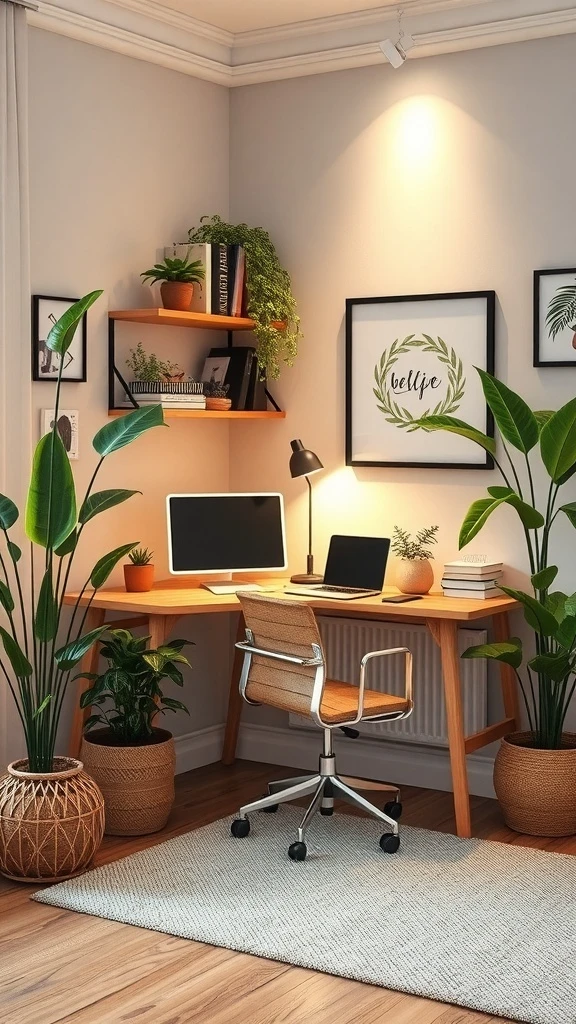
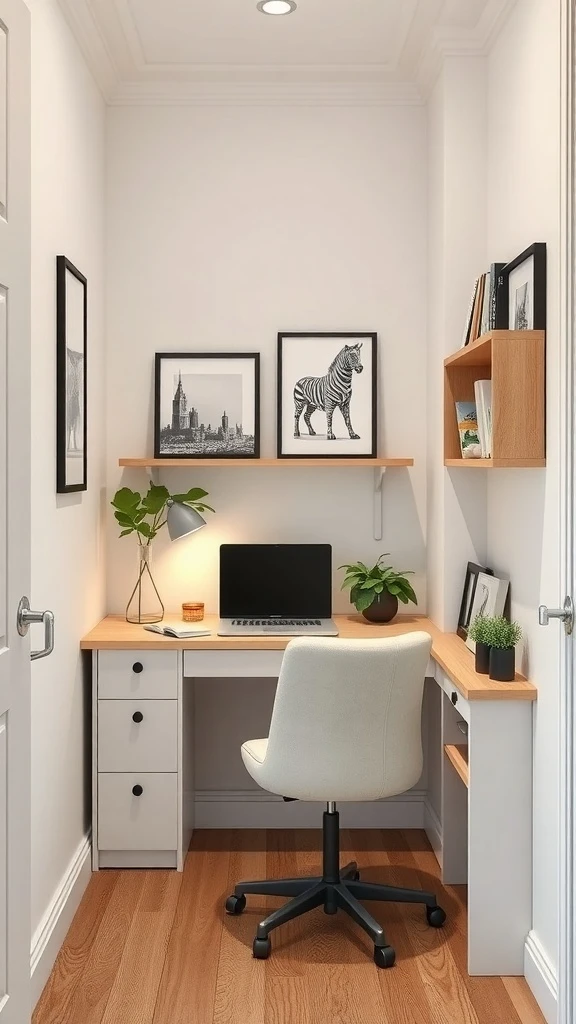
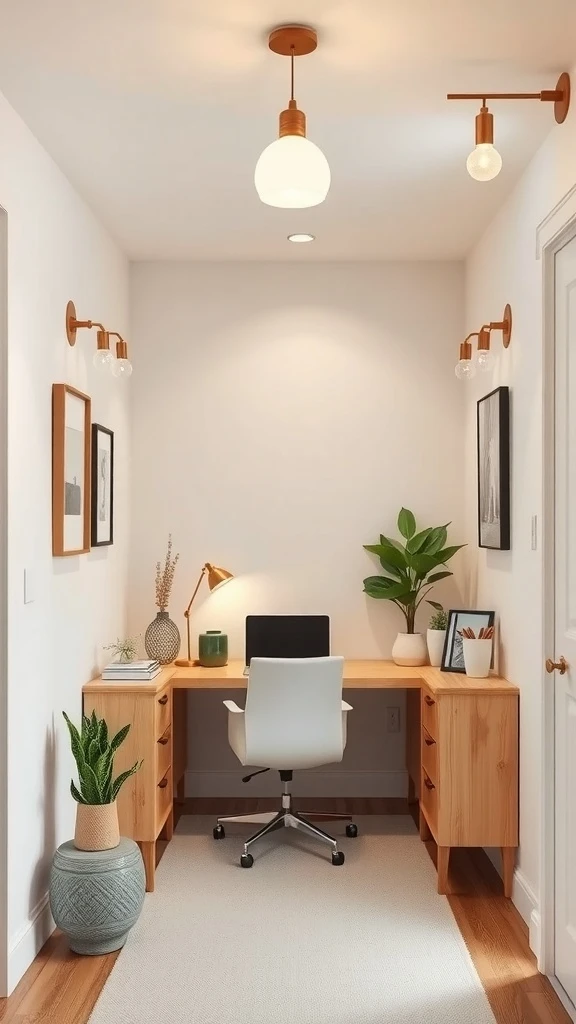
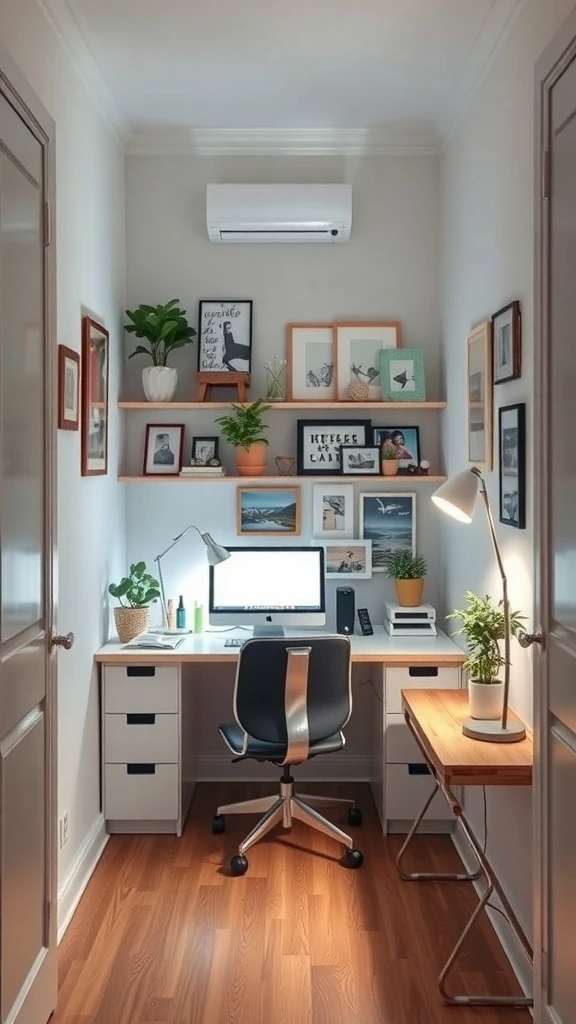
There is something so satisfying about a corner desk that just fits. Picture warm wood tones tucked right into that awkward angle of your room. Soft lighting casting a golden glow across everything. The whole setup feels intentional and cozy. Like a little productivity pocket that was always meant to be there. A few green plants on the surface bring that fresh energy you did not know your workspace needed.
Push your desk snugly into the corner so both walls support the layout and nothing feels wasted. Mount a couple of floating shelves right above for books and small storage pieces. That way your desktop stays clear. Choose a desk with warm natural wood finishes and pair it with a soft ambient lamp to keep the mood relaxed. Tuck a trailing pothos or a small snake plant on the shelf to add life without stealing any precious desk real estate.
Color Schemes to Make Spaces Feel Larger
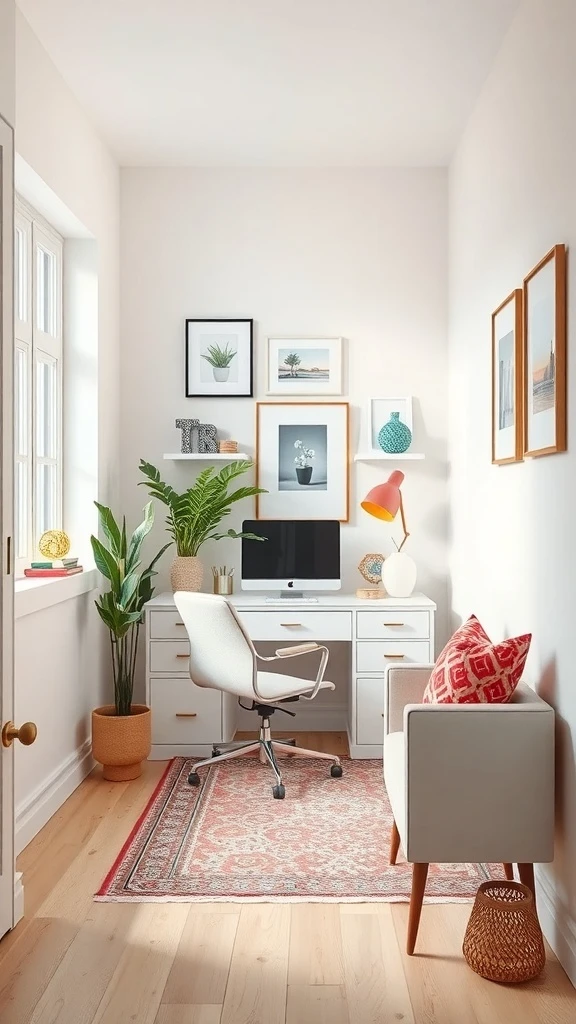
Light colors are an absolute game changer for tight offices. When your walls, desk, and chair all live in the same soft palette, the boundaries of the room practically disappear. Everything blends together in this dreamy open way. The room just breathes. Then one bold accent piece like a bright lamp or a patterned throw pillow drops in and gives the whole space personality without shrinking it.
Paint your walls in soft whites, creams, or very light grays and pick furniture that matches closely. A white or light wood desk paired with a matching chair creates that seamless look where nothing interrupts the eye. Add one or two pops of a warm color like burnt orange or dusty rose through accessories. Place a small potted plant on the desk to introduce just enough contrast and freshness to round out the whole vibe.
Compact Desk Solutions for Small Areas
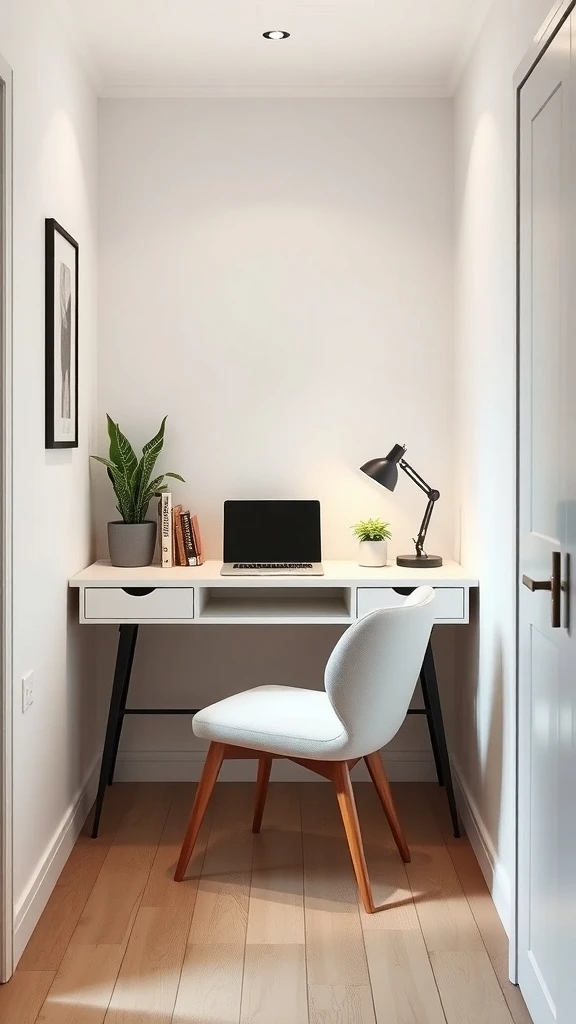
A slim well-designed desk can completely change how a small office feels. Imagine a clean white surface with just enough room for your laptop and a coffee cup. A couple of drawers underneath hiding away all the clutter. It looks polished and put together without trying too hard. A tiny lamp and a little succulent on the corner give it that Pinterest-perfect touch that makes you actually want to sit down and work.
Look for desks that are around 36 to 42 inches wide with built-in drawer storage so you skip the need for extra organizers. A white or light finish keeps the piece from visually weighing down the room. Pair it with a slim profile chair that does not stick out past the desk edge. Keep your desktop minimal with just one or two decorative items and store everything else inside those drawers.
Using Mirrors to Create Depth
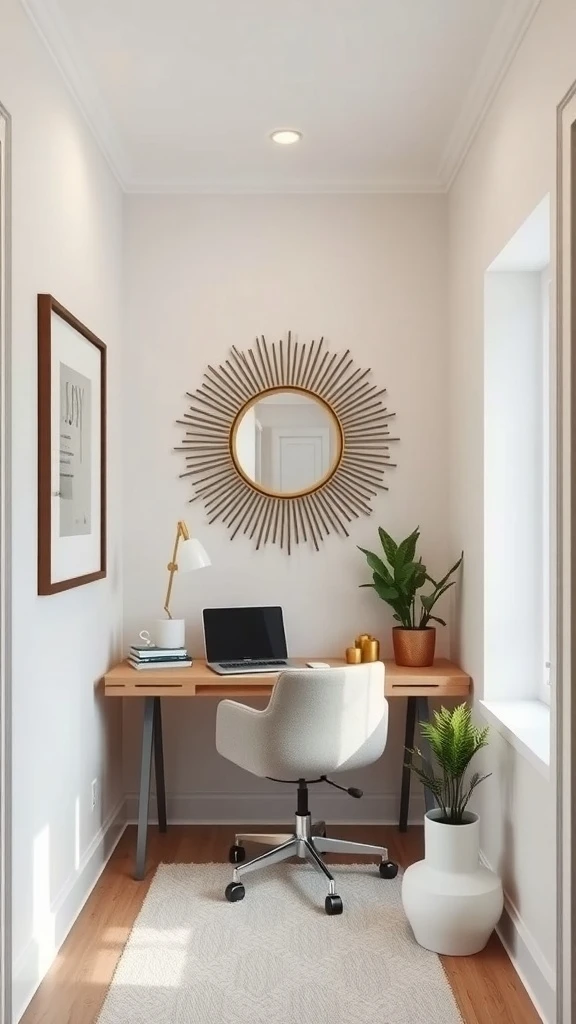
A mirror in a small office is honestly one of the easiest upgrades you can make. It catches every bit of light in the room and throws it right back. Your workspace glows in a way that feels so much bigger than it actually is. A round mirror with a simple frame hung above your desk adds this chic focal point. The whole room just opens up.
Hang a round or oval mirror directly above or slightly to the side of your desk where it can catch the most natural light from a nearby window. Choose a frame that complements your existing decor. Gold for a warm feel or black for something more modern. Position it at eye level or slightly above so it draws your gaze upward and gives the room a taller feel. This is a no-renovation trick you can pull off in ten minutes with a single nail.
Maximizing Vertical Space with Shelving
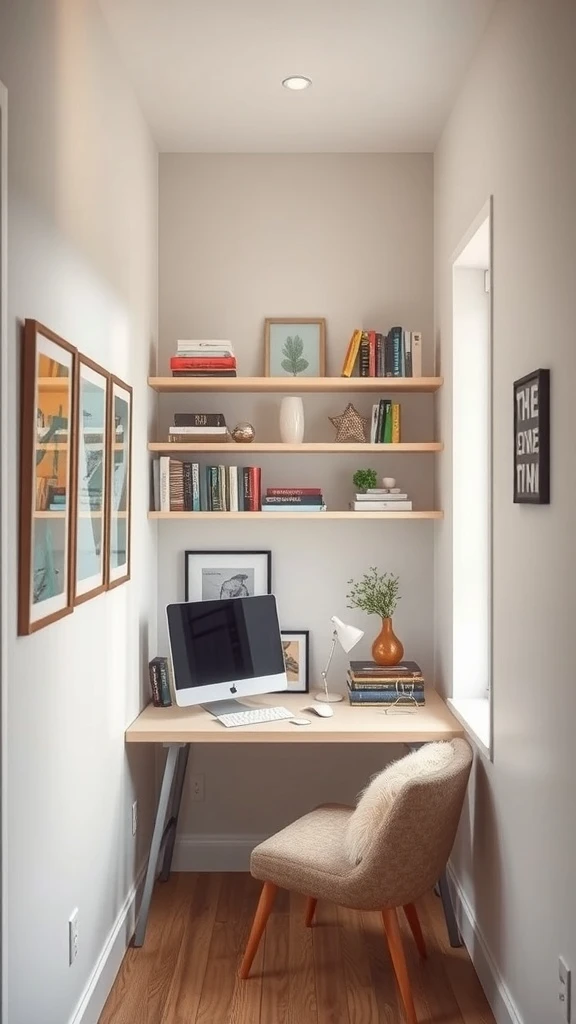
When your floor space is limited, your walls become your best friend. Open shelving mounted right above your desk turns dead air into beautiful storage. It holds everything from your favorite reads to little decorative pieces that make the space yours. The whole look is clean and intentional. Your actual work surface stays free for what matters. Light wood tones and a bright wall color behind the shelves make the entire area feel airy and spacious.
Install two or three floating shelves at staggered heights above your desk starting about 18 inches from the surface so you still have head room. Use them for a mix of practical items like books and baskets and a few personal touches like small framed prints or a trailing plant. Stick with light-colored wood or white shelves to keep the visual weight low. Only display what you actually love or use regularly so the shelves stay curated and never look cluttered.
Multi-Functional Furniture for Efficiency
Furniture that pulls double duty is the secret weapon of every gorgeous small office you have ever saved on Pinterest. A sleek desk with hidden storage compartments keeps all your supplies tucked away. Still looks magazine-worthy on the surface. Pair that with a chair that is compact but seriously comfortable. Suddenly your tiny office feels like it was professionally designed. Everything has a purpose and nothing feels extra.
Hunt for desks that include built-in drawers, pull-out keyboard trays, or integrated cable management. A slim console-style desk with a drawer works beautifully in tight spaces and doubles as a vanity if your office shares a room. Choose a chair with a small footprint but adjustable height so it slides fully under the desk when you are done for the day. Add one shelf above for both display and storage and finish with a small plant to keep the energy fresh.
Incorporating Natural Light with Window Treatments
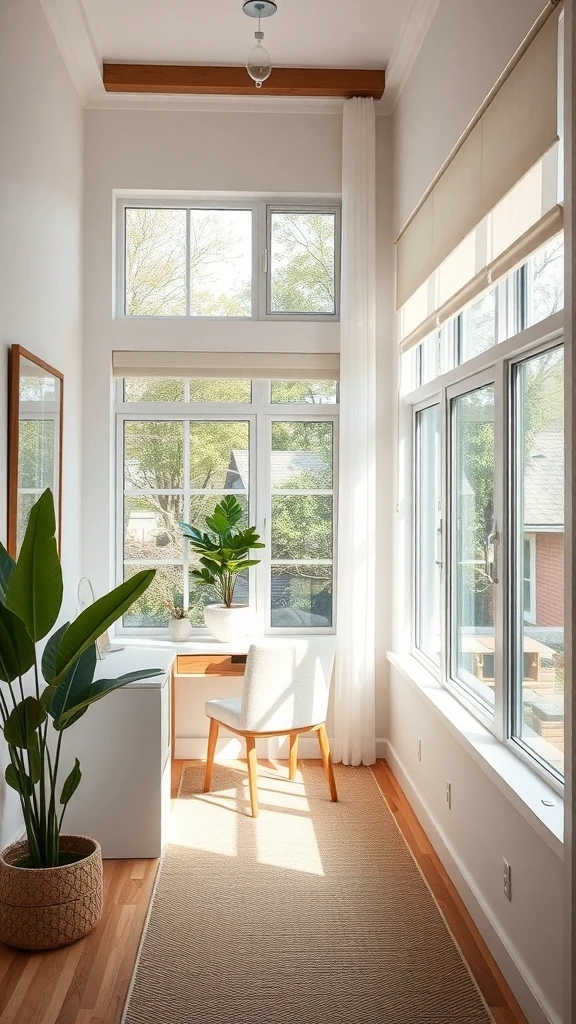
Sunlight pouring into a narrow office changes absolutely everything. The room feels warmer. More alive. Suddenly way more spacious than the square footage suggests. Sheer curtains softly filtering that light while still keeping things private give you this dreamy bright workspace. It is the kind of setup that makes Monday mornings a little less painful.
Position your desk as close to the window as possible so you get the most natural light throughout the day. Layer sheer white curtains with adjustable blinds behind them so you can control glare when the sun gets intense. Choose curtains that hang from ceiling to floor to make the room feel taller. Place a small green plant on the windowsill to tie the outdoor and indoor vibes together and keep the air around you feeling clean and fresh.
Decluttering Strategies for a Clean Workspace
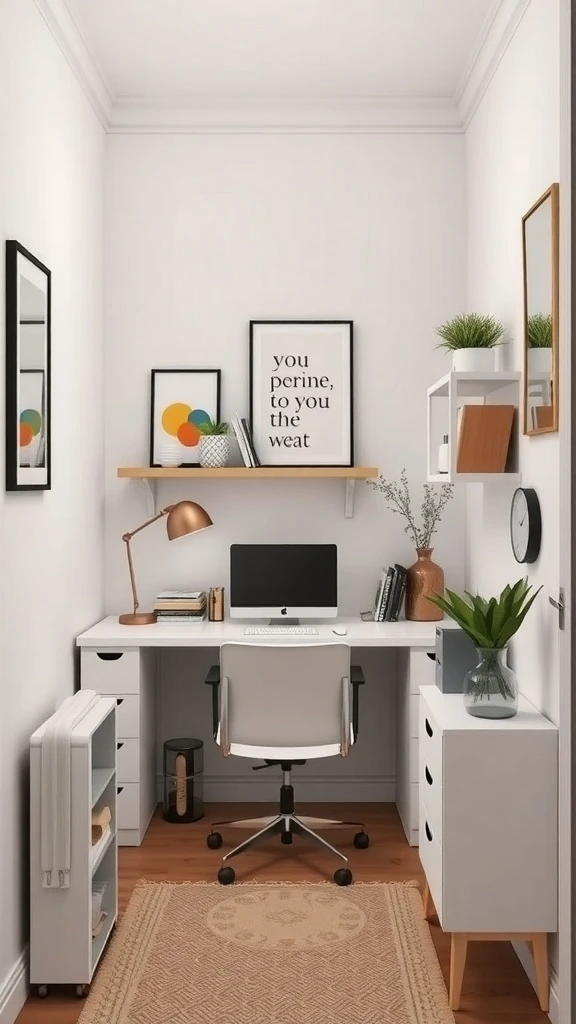
A clutter-free desk in a narrow office feels like a deep breath for your brain. When the surface is clear except for your computer and maybe one beautiful object, your focus sharpens. The whole room looks twice its size. Clean lines. Neutral tones. Only the essentials visible. That calm grounded energy makes working from home actually enjoyable.
Start by removing everything from your desk that you have not used in the last week. Keep only your computer, one pen holder, and maybe a single candle or plant on the surface. Use a small rolling cart or a slim cabinet nearby for supplies you need but do not want visible. Add floating shelves for books and decorative items so they stay off the desktop. Spend five minutes at the end of each workday resetting your space so you always walk into a fresh start the next morning.
Stylish Lighting Solutions for Ambiance
Layered lighting turns a basic narrow office into the most inviting little workspace. Think about a statement globe pendant overhead casting a soft general glow. A focused desk lamp lighting up your tasks perfectly. Then a pair of wall sconces on either side for that warm ambient layer. Late-night work sessions start to feel almost cozy instead of draining. The whole room just wraps around you.
Start with one overhead fixture that gives off warm soft light rather than harsh fluorescent tones. Add a desk lamp with an adjustable neck so you can direct light exactly where you need it. If you have wall space on either side of your desk mount slim sconces to create that layered glow that makes the room feel deeper. Choose fixtures in matching metals like brass or matte black to tie the whole look together effortlessly.
Utilizing Wall Art for Inspiration
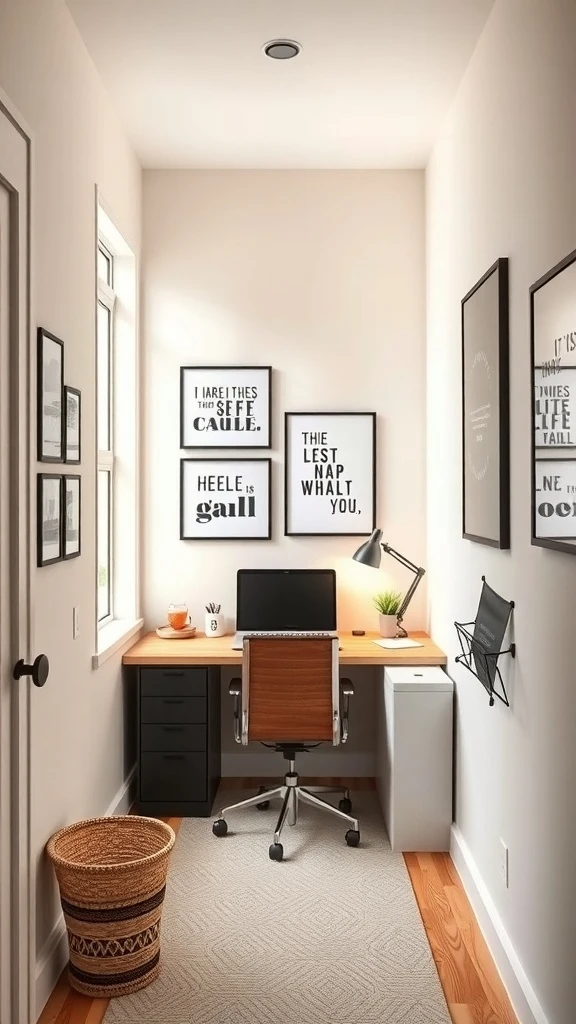
Walking into your office and seeing a gallery wall filled with quotes and prints that actually mean something to you hits different. It is not just decoration. It is your daily reminder of why you are showing up and putting in the work. Framed pieces in different sizes and styles create this collected-over-time look. Serious personality. Even the narrowest wall feels rich and full.
Mix frame sizes and styles for an eclectic gallery wall feel rather than matching everything perfectly. Include a mix of motivational quotes, abstract prints, and personal photos so every piece sparks something when you glance up. Arrange them going upward from your desk level to draw the eye higher and make the ceiling feel taller. Use command strips if you rent so you can rearrange without damage and keep the layout feeling fresh whenever you need a change.
Choosing the Right Chair for Comfort
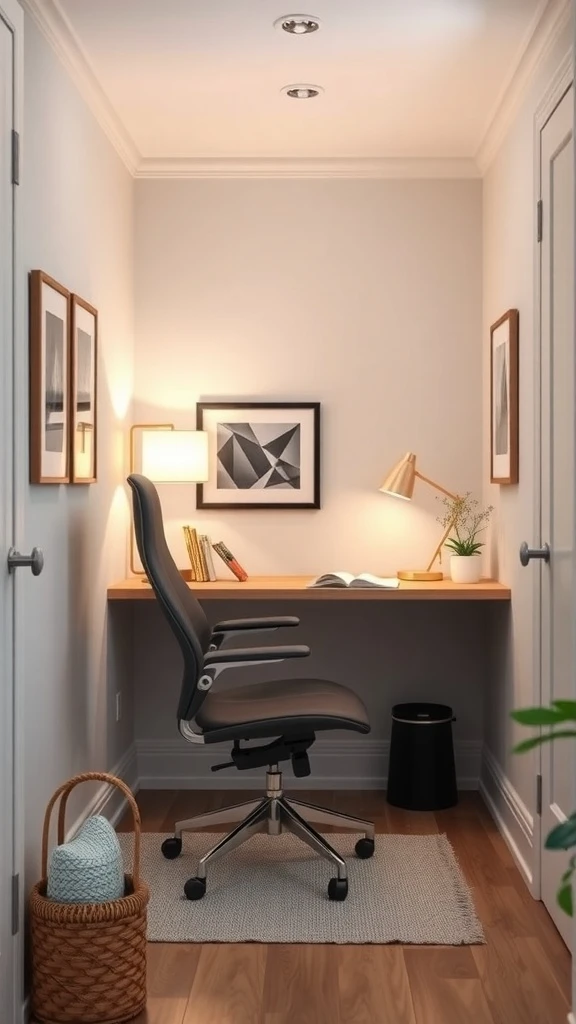
Your chair honestly makes or breaks the entire home office experience. A sleek modern design that fits the scale of a narrow room while still cradling your back through a full workday is worth every penny. The right chair blends into your decor like it was always part of the plan. Quietly doing the heavy lifting of keeping you comfortable hour after hour.
Look for a chair with good lumbar support and adjustable height that does not have wide armrests eating into your limited space. Breathable mesh or smooth easy-to-clean fabric works best for long sessions. Match the color to your desk and wall tones so it does not visually break up the room. Test it by sitting for at least twenty minutes before committing because comfort you cannot feel in a store photo is what separates a good investment from a regretted one.
Creating a Cozy Reading Nook
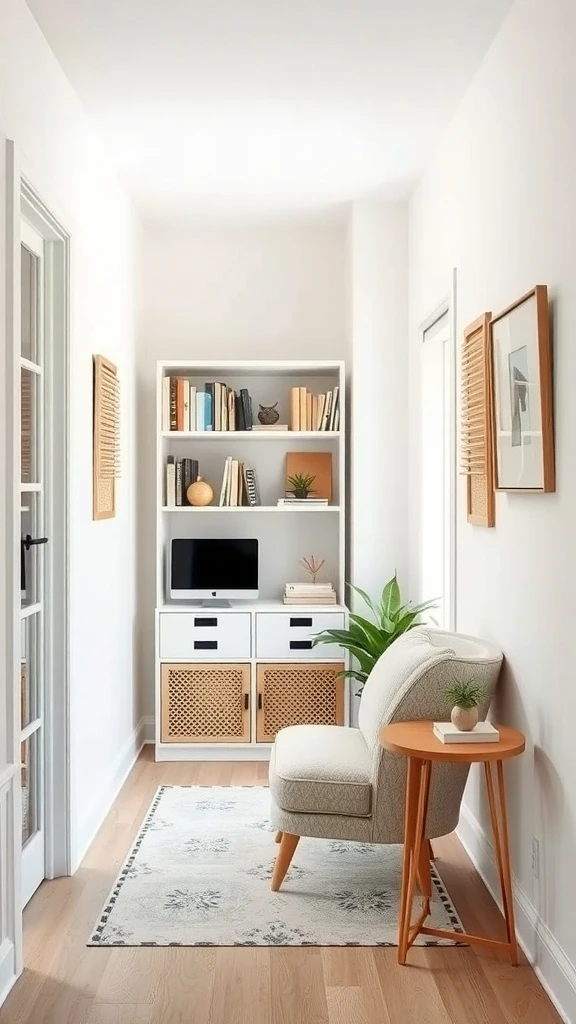
Turning one end of your narrow office into a little reading corner is the kind of idea that makes the whole room feel special. A comfortable chair angled beside a tiny side table. Your current read and a warm cup of tea waiting on it. It looks like a scene from a lifestyle magazine. A neatly styled bookshelf in the background adds layers of texture and color. It makes the room feel like more than just a place to work.
Pick a compact accent chair that is deep enough to curl up in but slim enough to not block walkways. Set a small round side table beside it for your drink and reading glasses. Place a short bookshelf nearby organized with a mix of books standing up and stacked horizontally for visual interest. Add a soft area rug underneath the chair to define the zone and make your feet happy. One small plant on the bookshelf ties it all together beautifully.
Incorporating Plants for a Fresh Atmosphere
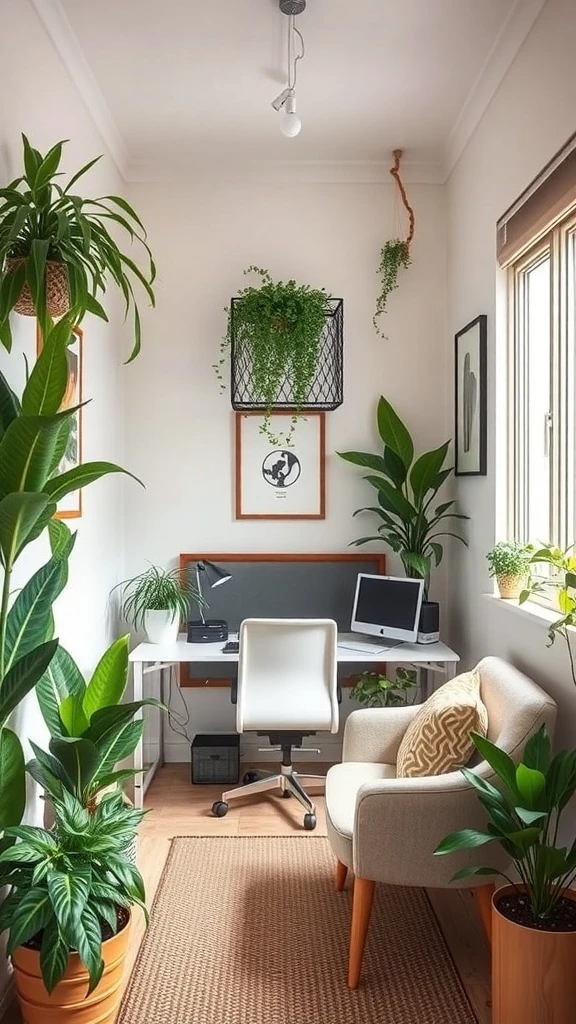
Filling your narrow workspace with greenery is like giving the whole room a fresh start every single morning. Tall leafy plants in a corner. A small pot on the desk. Maybe a trailing vine hanging from a high shelf. This lush layered look feels alive and calming at the same time. The air even feels different when there is green around you. It is the kind of detail that makes people screenshot your office setup.
Go for low-maintenance varieties like pothos, snake plants, or ZZ plants that thrive in indoor light without demanding much attention. Place a taller plant like a fiddle leaf fig in a floor pot near the corner to add height and fill empty vertical space. Set a small succulent or two on your desk for that close-up touch of nature. Hang a trailing plant from a ceiling hook or a high shelf to create that jungle-inspired depth without using any of your precious floor or desk space.
Incorporating Technology for a Modern Look
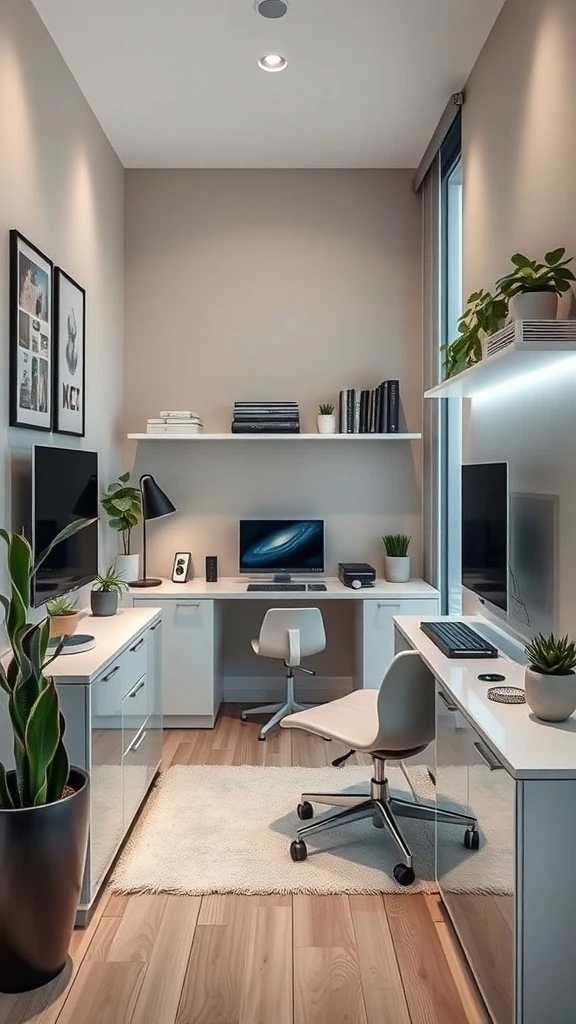
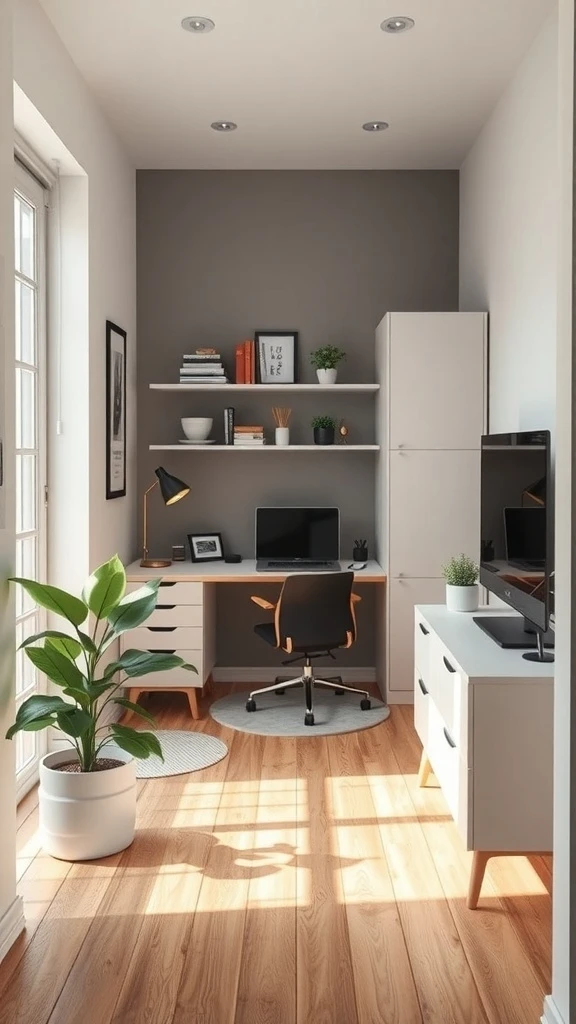
A dual monitor setup on a slim desk surrounded by clean white surfaces and recessed lighting is the kind of modern home office that stops your scroll. Everything looks intentional and streamlined. The tech serves the space instead of cluttering it. Minimalist shelving overhead keeps accessories organized. A couple of plants soften the whole look so it never feels cold or sterile.
Mount your monitors on a dual arm stand to free up desk space underneath and keep cables routed cleanly behind the desk with adhesive clips. Choose a compact desk in white or light wood to reflect the recessed ceiling lights and keep the room feeling bright. Use one shelf above the monitors for tech accessories and a small plant so everything stays within arm’s reach. Invest in a wireless keyboard and mouse to eliminate cord clutter and keep that sleek modern surface looking exactly the way you planned it.
Personalizing Your Space with Decor
The little details are what turn a generic desk setup into a space that actually feels like yours. Framed photos of people and places you love. A plant that you have kept alive for months. A throw pillow on your chair that makes you smile every time you sit down. Warm wood furniture and a pendant light hanging overhead pull everything together. Collected. Layered. Effortless but completely intentional.
Start with one or two framed photos on your desk or shelf that make you happy when you see them. Add a small plant or dried arrangement for organic texture. Choose a throw pillow in a color that complements your furniture and toss it on your office chair for comfort and style. Hang a single pendant light above your workspace for both function and that pulled-together designer feel. Keep the overall item count low so the space feels curated and never crowded.
Designing a Functional Work Zone
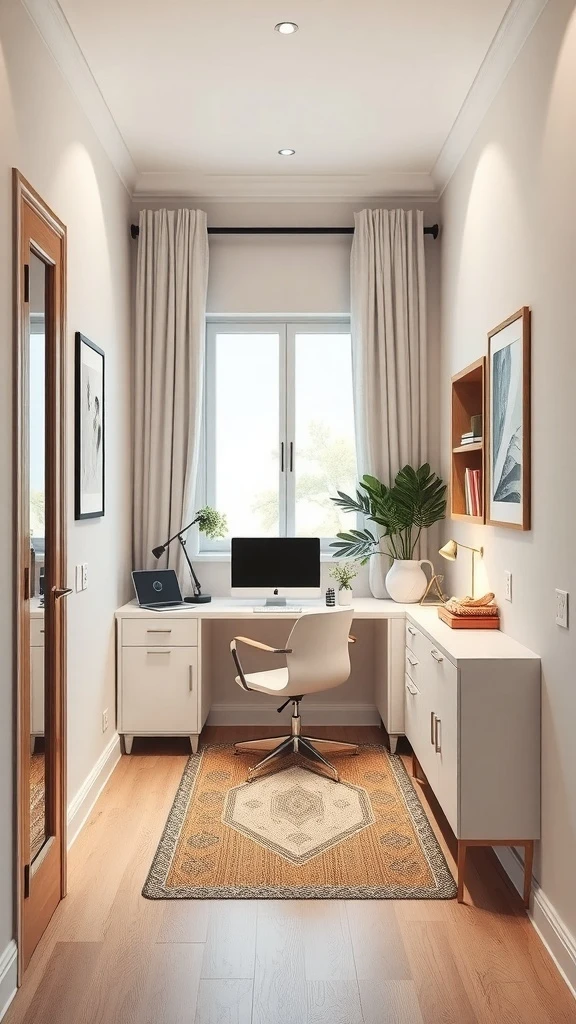
When every piece of furniture earns its spot and the window light hits your desk just right, even the narrowest room becomes a workspace that pulls you in. A compact desk pushed against the wall with a clear view of the window. The room feels intentional and calm. A slim storage cabinet nearby keeps supplies hidden. A cozy rug underfoot adds warmth and texture that makes the whole zone feel finished and inviting.
Place your desk along the longest wall facing or near the window for maximum natural light throughout the day. Choose a storage piece like a narrow cabinet or a slim bookcase that fits within the same wall line so nothing juts out into walkway space. Layer a soft area rug under the desk and chair to define your work zone and absorb sound. Finish with a single potted plant and one piece of wall art to add warmth without visual noise.
Incorporating Personal Touches for Motivation
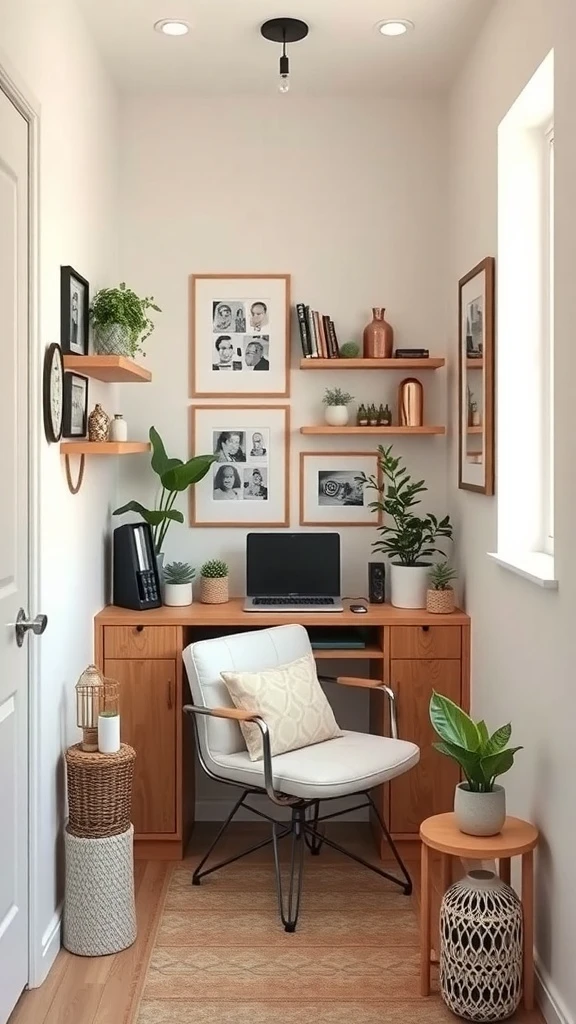
Surrounding yourself with things that spark your drive makes a narrow office feel like your own personal headquarters. Shelves lined with photos. Small art pieces. A couple of green plants. This lived-in energy that a blank desk just cannot match. The space feels warm and real. Like somewhere you actually want to spend your hours instead of just somewhere you have to.
Dedicate one shelf to personal items like printed photos, a favorite candle, or a small keepsake that reminds you of your goals. Mix in two or three plants of different heights for visual variety and that fresh feel. Keep your desk arrangement practical with just your computer and one or two meaningful objects visible. Choose a comfortable chair with a cushion that invites you to sit down and stay a while so the whole setup supports both your motivation and your body.
Using Foldable Furniture for Flexibility
Foldable furniture is the ultimate secret for anyone whose office also needs to be a guest room or a living space at different hours. A desk that folds flat against the wall when the workday ends gives you your room back instantly. The transformation is so smooth. No one would even guess there was a full workspace here an hour ago. Flexibility without sacrificing an ounce of style.
Look for a wall-mounted fold-down desk that locks into place when open and sits flush when closed. Pair it with a foldable chair or a slim stool that tucks into a closet in seconds. Mount a shelf or two above the desk position for items you always want accessible even when the desk is folded away. When the desk is up and you are ready to work add your laptop and a small plant and you have a full workspace that came out of nowhere.
Incorporating Soundproofing Elements
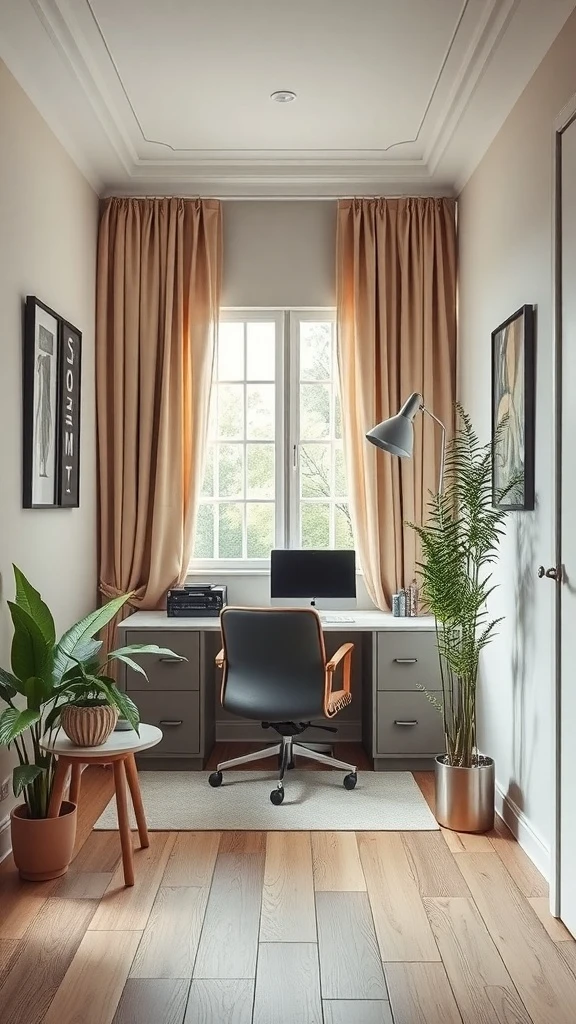
Peace and quiet in a narrow home office is not just nice to have. It is everything. Heavy curtains framing the window do double duty by looking gorgeous and muffling outside noise. A thick plush rug underfoot absorbs sound from your own movements. Plants tucked into corners add a subtle acoustic buffer on top of their calming visual appeal. The whole space feels like a little sanctuary carved out of a busy house.
Swap thin curtains for heavy lined drapes in a fabric that complements your decor to immediately cut down on street noise. Lay a dense area rug that covers most of the floor under your desk and chair for sound absorption and added comfort. Place a large leafy plant in the corner closest to any noise source since the foliage helps break up sound waves naturally. If you want to go further add a decorative acoustic panel behind your monitor that blends into the wall like art while seriously reducing echo.
Establishing a Focused Work Atmosphere
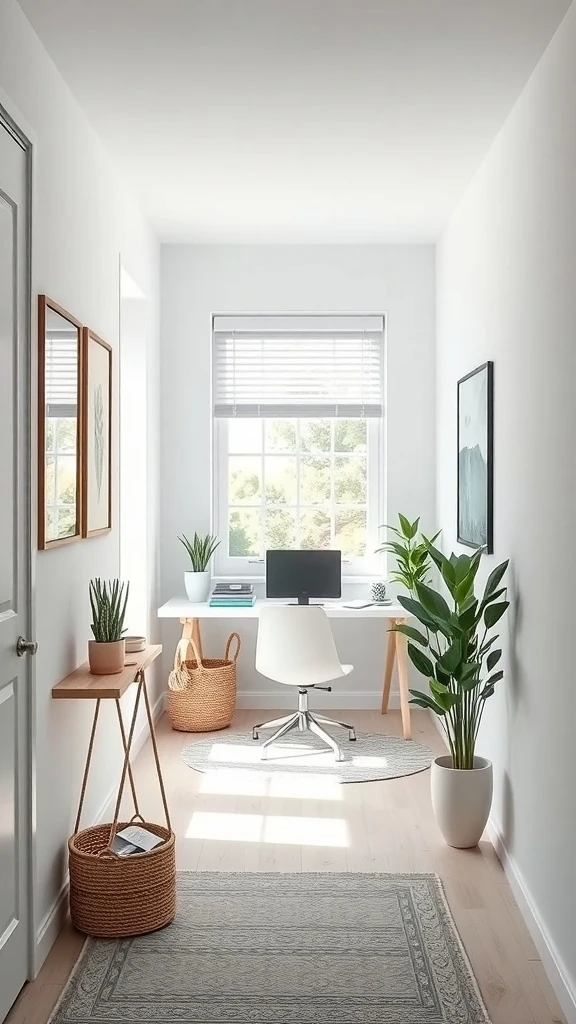
A narrow office flooded with window light, dressed in soft neutrals, and stripped down to only what matters creates this focused energy you can feel the moment you sit down. Nothing fights for your attention. The desk is clear. The walls are calm. Every single object in the room has a reason for being there. It is the kind of workspace where deep work actually happens because distractions simply do not exist.
Keep your wall color light and your furniture tones warm but muted so nothing visually competes for your focus. Position your desk where natural light hits it best and keep only your computer and one small personal item on the surface. Use a woven basket or a slim side table for anything you need nearby but do not want on the desk itself. Hang one piece of simple framed art that you find calming and let that be the only wall decoration in your direct line of sight so your eyes always have a restful place to land between tasks.
20 Creative Small Dining Room Ideas to Maximize Space
By Jasmine Hart /
Small dining rooms might seem tricky to work with, but they’re actually full of design potential. Whether it’s smart furniture choices or eye-catching decor, there are so many ways to turn your compact dining area into something both beautiful and practical. Here are some fresh and useful ideas to help you make the most of your small dining space.
Table of Contents
Creative Lighting Solutions
Lighting has the power to completely shift the mood of a small dining room.
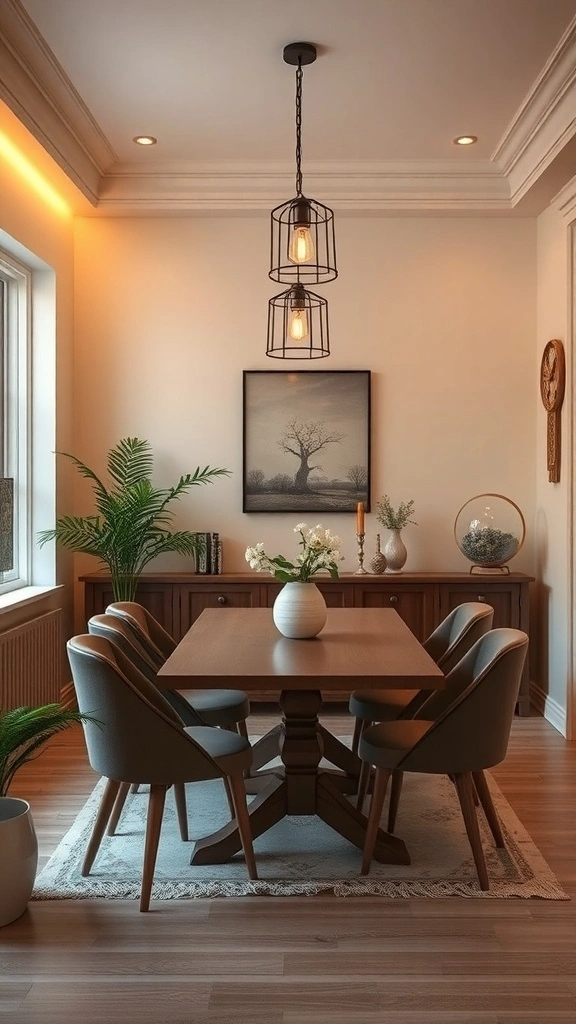
Think about installing a pair of hanging pendant lights. They do more than just light up the space — they bring real personality to the room. That warm, soft glow from well-chosen fixtures sets a cozy vibe. Ideal for everything from quiet dinners to relaxed get-togethers.
Adding recessed ceiling lights alongside your pendants boosts overall brightness without making the room feel harsh. Go for dimmable lights if you can. It gives you the freedom to dial the brightness up or down depending on the occasion.
A well-lit dining room naturally encourages better conversations and more enjoyable meals.
Don’t overlook the power of decorative touches either. Things like wall art and a few plants near the lighting really tie everything together. They catch the eye and add warmth. Smart lighting choices can turn even the tiniest dining rooms into spaces people actually want to hang out in.
Incorporating Mirrors for Depth
Mirrors are one of the best tricks for making a small dining room feel bigger.
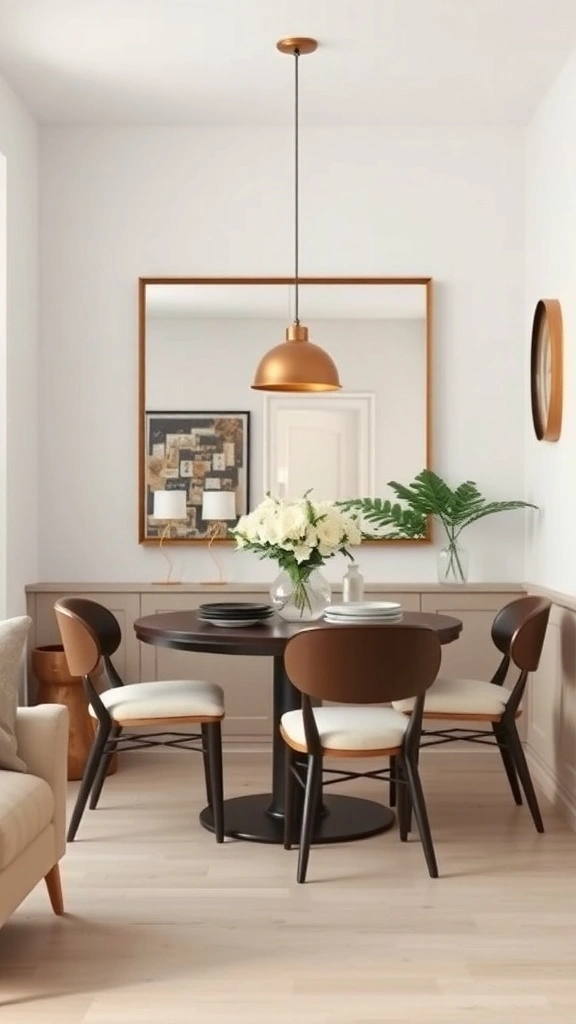
They create an illusion of extra space. Instantly making the area look more open and expansive. Hanging a large, nicely framed mirror right above the dining table does double duty — it bounces light around the room while adding a stylish design element.
A round dining table paired with sleek, modern chairs looks great underneath a mirror. Throw in some soft tones and natural accents like fresh flowers and a bit of greenery. You’ve got a space that feels truly welcoming.
This kind of setup shows how a mirror can act as both a focal point and a space expander.
When you’re picking out a mirror, think about shape and frame style. A round mirror softens the hard lines common in smaller rooms. A rectangular one gives things a more polished, streamlined feel. Hanging it across from a window is a pro move — it maximizes natural light and makes the whole dining area feel brighter and more open.
Choosing the Right Color Palette
The colors you choose for your small dining room can have a huge impact.
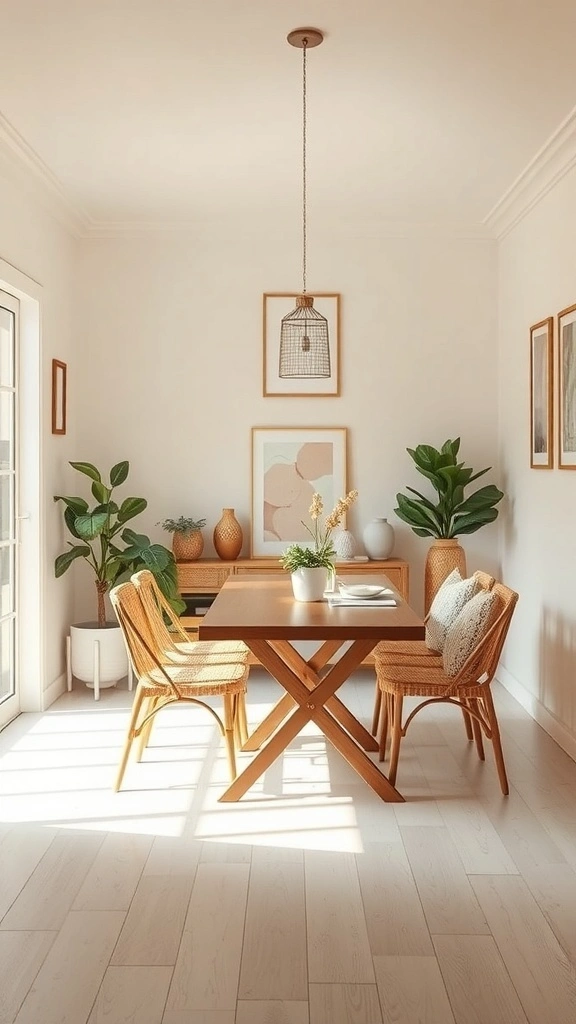
A space filled with natural light and dressed in soft, neutral shades instantly feels calm and inviting. Exactly the kind of atmosphere you want for sharing meals with the people you love.
Lighter shades like whites and gentle beiges are your best friends in a small room. They bounce light around and make everything feel more spacious. Wooden furniture in warm tones adds balance against those lighter walls.
And you can always inject some energy through colorful decor. Think lush green plants or a vibrant piece of art.
A monochromatic color scheme with different shades of the same hue is another smart approach. It adds visual interest without making things feel cluttered. For example, light beige walls alongside darker wood pieces creates a pulled-together look.
Don’t forget texture either. Woven baskets, textured cushion covers, or a chunky throw can really bring your dining area to life.
Stylish Bar Carts as Dining Solutions
Bar carts are a brilliant addition to any small dining room.
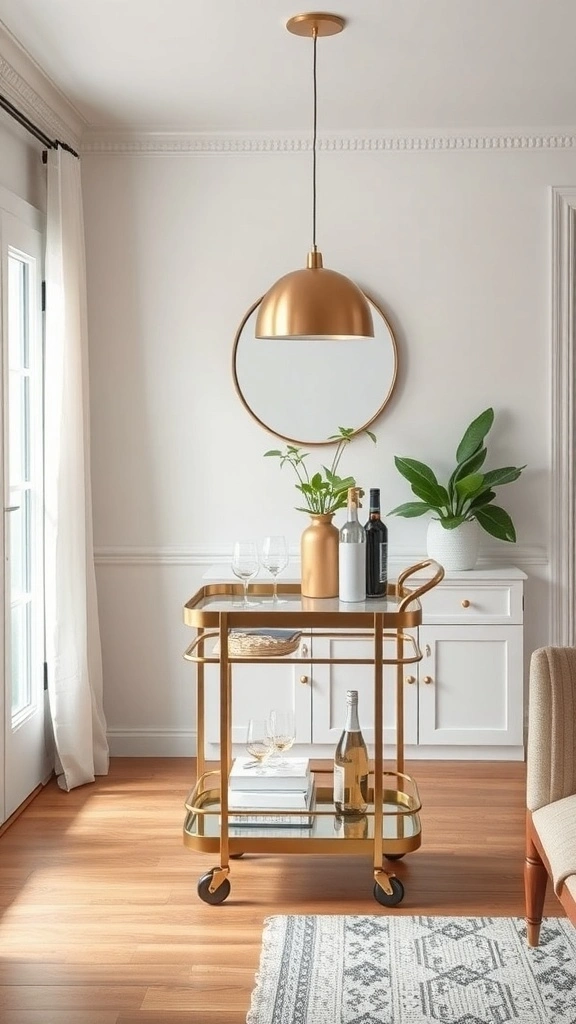
They pack in both style and practicality without hogging too much floor space. Picture a sleek gold bar cart tucked into the corner of a cozy dining area. It just works.
A two-tiered cart gives you plenty of room to organize. Keep wine bottles, glasses, and a decorative vase on top. The bottom shelf can hold books, extra napkins, or cocktail supplies. It looks fantastic and makes serving drinks effortless.
Having a bar cart in your dining space can seriously level up your hosting game.
It encourages a more relaxed, social vibe and makes it easy to keep drinks flowing. The gold accents bring a touch of glamour. Turning the cart into a statement piece all on its own.
Make it yours! Stock it with your go-to spirits, favorite mixers, and a couple of decorative items that reflect your taste. With the right styling, a simple bar cart can transform your small dining room into a chic little entertaining hub.
Round Tables for Better Flow
Round tables are a seriously smart pick for small dining rooms.
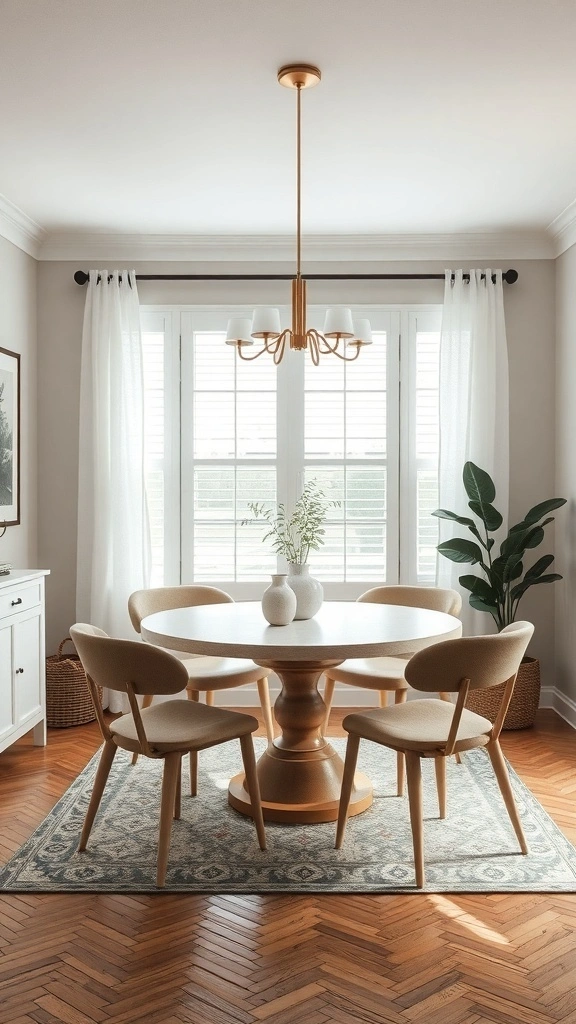
They naturally create a more intimate feel and make it way easier to navigate the space. Imagine a pretty round table with four comfy chairs. Perfect for cozy meals or small gatherings.
A table with a light wood finish brings warmth that complements most flooring types. The round shape encourages better conversation too. Everyone’s sitting closer and facing each other. Keeping the decor in soft, neutral tones only adds to that welcoming feel.
Big windows letting in plenty of natural light can really elevate the whole setup.
Adding a few plants and some simple decor pieces — like small vases on the table — brings life and character to the room. Together, these touches make the dining area feel open, bright, and inviting.
Going with a round table genuinely improves how a small dining room functions. It allows for smoother movement. Fits neatly into tighter spots. And still gives you plenty of seating. It’s one of those rare choices that’s both stylish and incredibly practical.
Incorporating Plants for Freshness
Plants have this amazing ability to breathe new life into a small dining room.
Fill the space with a few different varieties and suddenly everything feels greener, fresher, and more inviting.
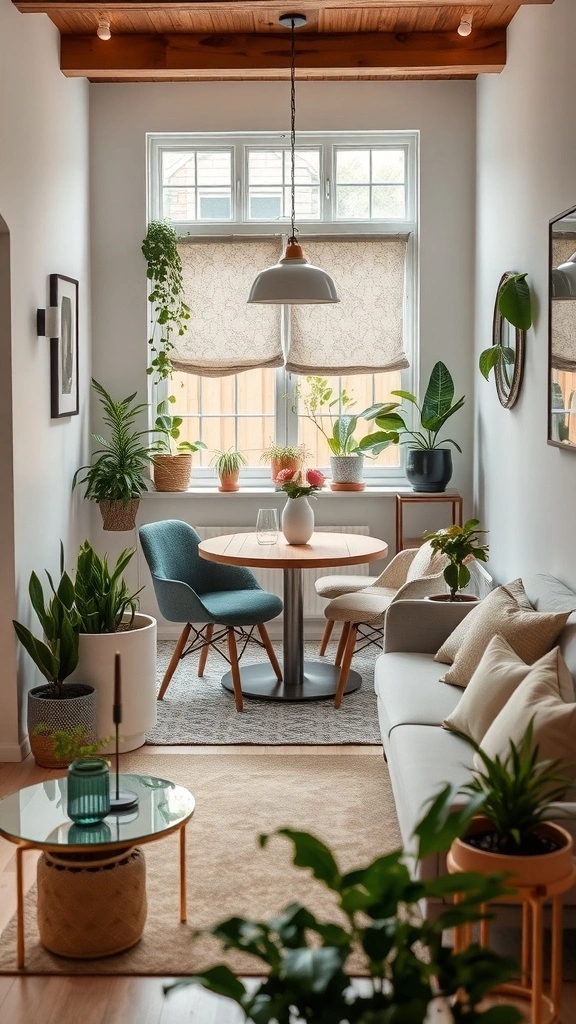
Positioning plants near windows is a smart move. They soak up that natural light and thrive. Beyond looking gorgeous, they also purify the air. Your dining area actually becomes a healthier place to spend time.
A round table at the center, surrounded by well-chosen chairs, makes for a great spot to enjoy meals or have long chats over coffee.
The greenery plays perfectly off modern decor. Adding balance and softness. Scatter a few pots on the floor and on shelves to add layers and dimension to the room.
Adding plants doesn’t need to be complicated either. Low-maintenance picks like succulents or ferns are perfect. They don’t ask for much and do really well in smaller spaces. If you want an easy way to freshen up your dining area, greenery is always a winning move.
Using Vertical Space Wisely
In a small dining room, thinking vertically is essential.
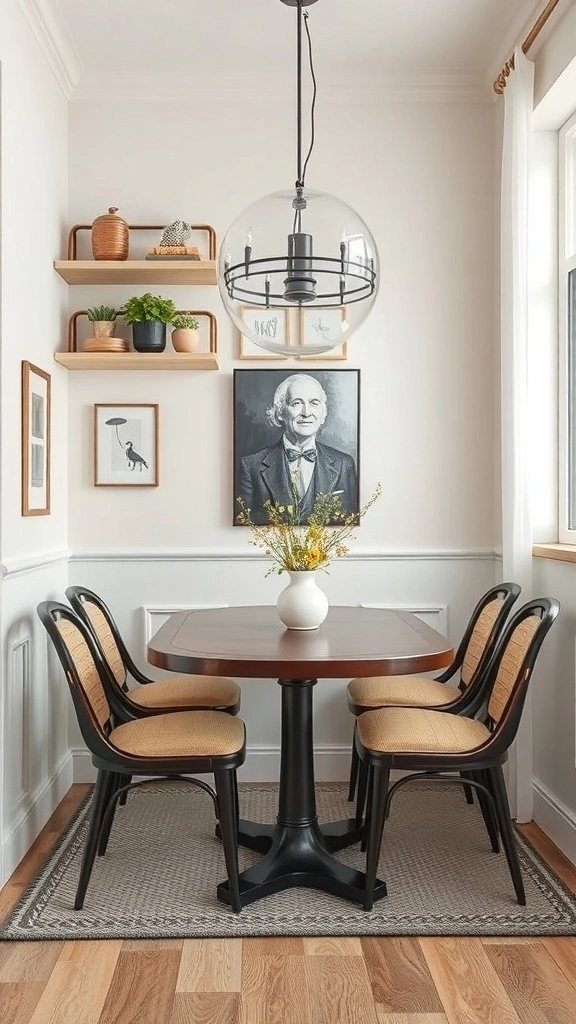
Wall-mounted shelves above the table can hold plants and decorative pieces. Adding charm and character without eating into your precious floor space.
A round table at the center is ideal for small gatherings. It keeps movement easy and the room feeling open. A hanging light fixture adds style while naturally drawing the eye upward. This creates a sense of height in the room.
Wall art, like a portrait or a collection of prints, brings personality without making things feel cramped.
Mixing natural materials — wood, greenery — adds warmth and keeps the space feeling alive and connected to nature.
This approach really proves how thoughtful design makes all the difference in a small space. When you focus on using your walls for both storage and decoration, you end up with a dining room that feels bigger and more put-together than it actually is.
Maximizing Space with Multi-Functional Furniture
When space is limited, every furniture piece has to earn its spot.
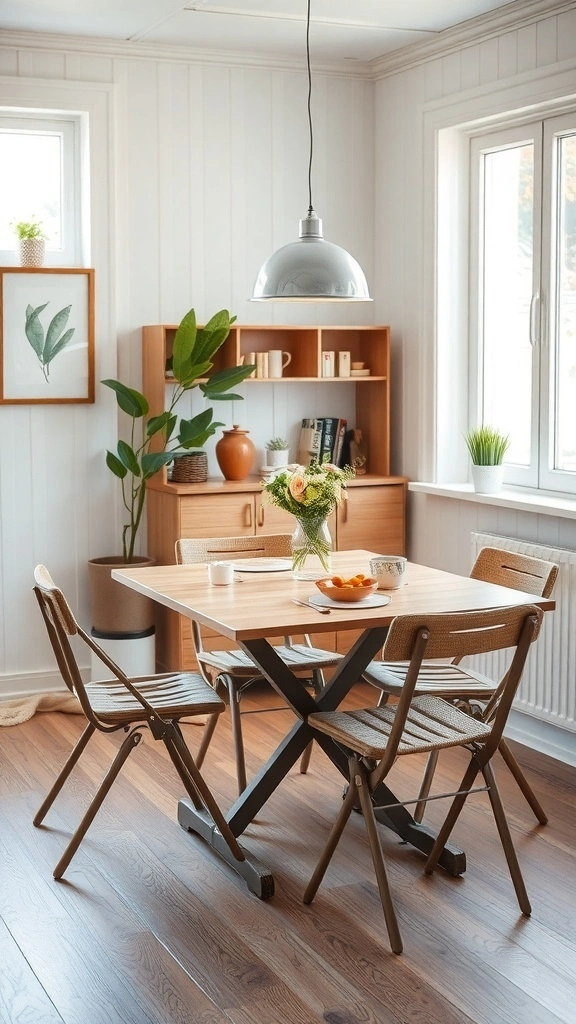
A clean, simple table with an unfussy design is easy to move around. That kind of flexibility matters a lot in a tight dining room.
Folding chairs are an absolute game-changer here. When dinner’s over, just fold them up and tuck them away. That instant space savings is perfect for smaller homes. Especially when the dining area needs to serve multiple purposes throughout the day.
Shelving in the background does double duty too.
It gives you storage and a place to display plants and decor. Keeping the room feeling airy and uncluttered. Using vertical space like this is just a smart way to stretch a small dining area further.
A pendant light over the table is another clever touch. It adds a modern feel and acts as a focal point that draws the eye upward. Making the ceiling feel higher. All in all, multi-functional furniture is the secret to making a small dining room work hard without looking cramped.
Incorporating a Drop Leaf Table
Drop leaf tables are pretty much made for small dining rooms.
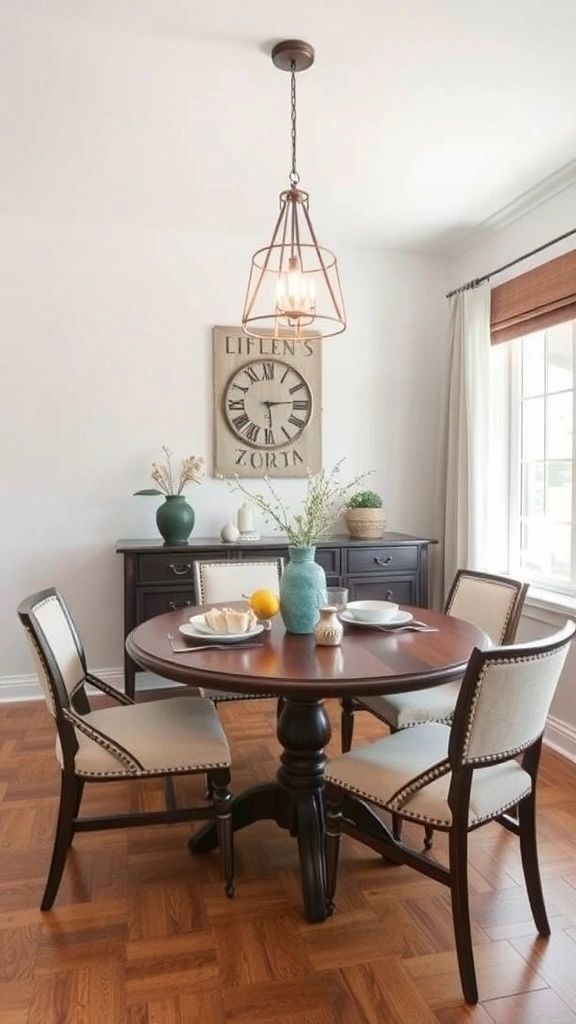
They give you flexibility without compromising on style. A round drop leaf table with four chairs around it makes a perfect setup. Great for everyday meals and the occasional gathering.
The beauty of this design is that you can extend the table when guests come over. Then fold the leaves back down when you need the extra floor space. It’s incredibly practical. Honestly kind of genius for smaller areas.
Warm wood tones in the table pair naturally with cozy decor elements like soft lighting and a wall clock.
Drop leaf tables also come in a wide range of styles. From rustic farmhouse to clean and modern. Finding one that fits your taste is easy.
Dressing the table with a simple vase or a bowl of fruit adds that extra bit of charm. It’s a small detail, but it makes the whole setup feel more intentional and enjoyable. If maximizing your small dining space is the goal, a drop leaf table should be near the top of your list.
Designing a Cozy Nook
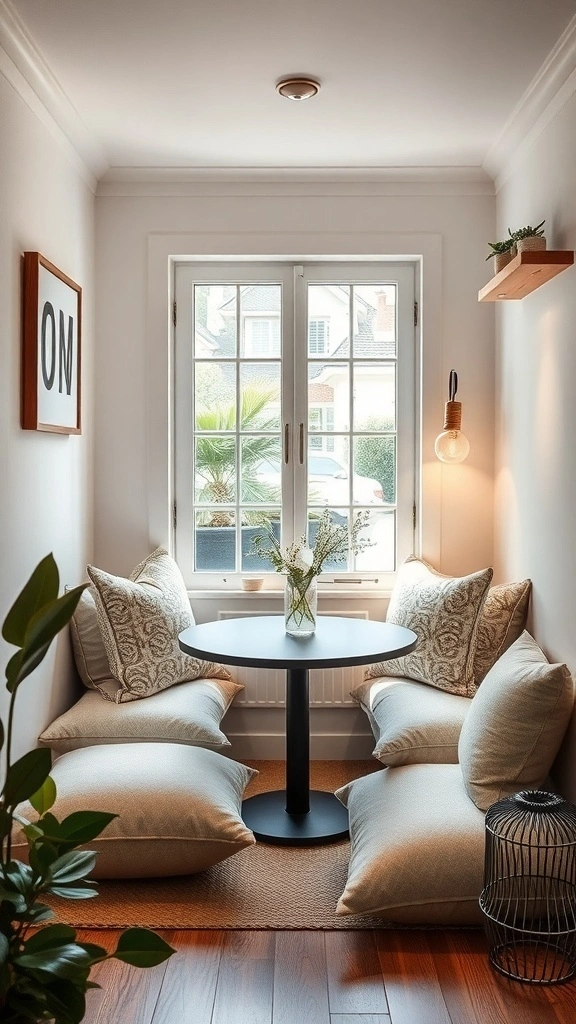
Turning a corner of your dining room into a cozy nook can completely change the feel of the space.
Picture soft, oversized cushions paired with a small round table tucked by a window. It’s the kind of spot that makes you want to sit down and stay a while.
A large window is a real asset here. Natural light streaming in makes the nook feel open and airy. Exactly what you need in a small room. Keeping the decor simple — maybe just a touch of greenery — adds freshness without overwhelming things.
Comfortable seating is everything in a nook.
Big, plush cushions invite you to relax. Making the spot just as good for a morning coffee as it is for a light dinner. Paired with a compact table, it stays functional without eating up too much space.
Personal touches like artwork or a few decorative items on the wall round out the look. A handful of well-chosen accessories give the nook its own character while keeping things clean and uncluttered.
Utilizing Built-In Seating Options
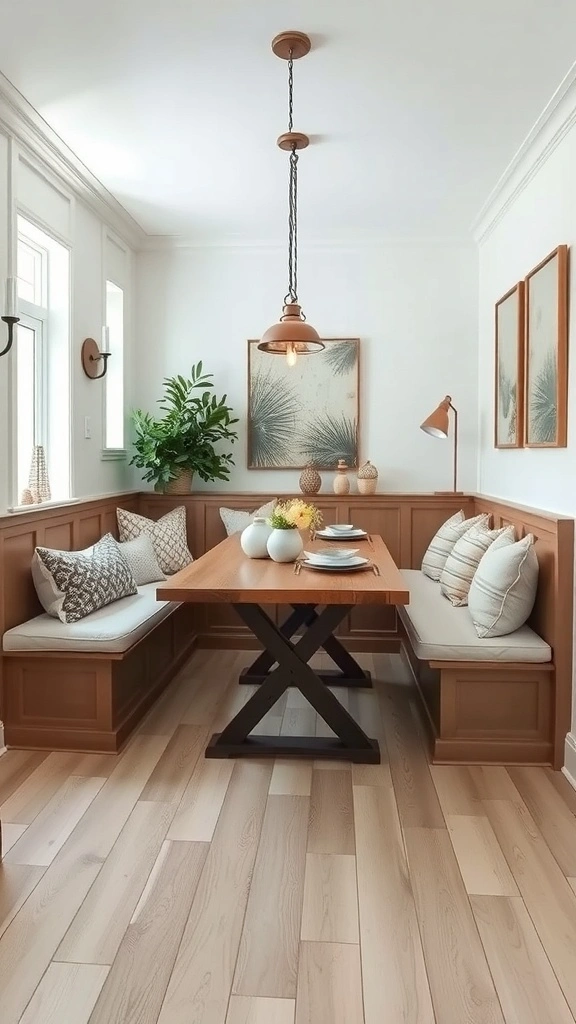
Built-in seating is one of the smartest ways to get the most out of a small dining room.
A wooden table paired with benches that fit snugly against the walls saves a ton of space. While creating a really inviting feel.
The beauty of built-in benches is that they open up more room in the center of the space. This layout naturally draws people together. Making conversation flow easily. Add some cushions on top and you’ve got seating that’s comfortable enough to linger over a long meal.
Natural light from nearby windows really enhances this kind of setup.
A few plants and pieces of art keep the space feeling lively without going overboard. It’s proof that built-in seating can be both highly functional and genuinely stylish. Even in the smallest dining rooms.
Layering Textures for Warmth
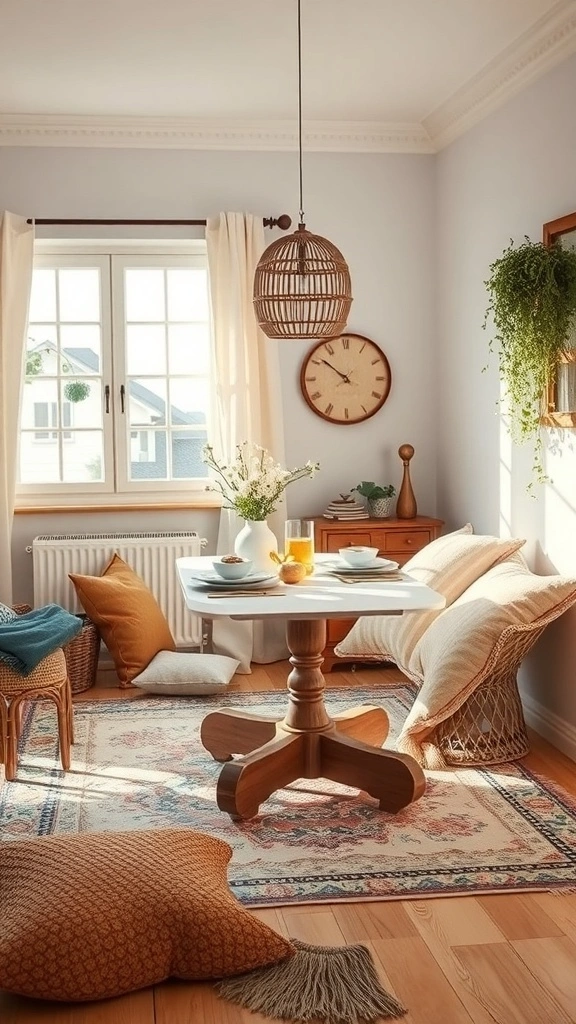
If you want your dining room to feel cozy, layering textures is the way to go.
A wooden table provides that warm, natural base. While soft cushions and a plush rug add comfort you can actually feel.
Mixing different fabrics creates real depth in the space. Think knitted pillows. A chunky rug. Linen curtains. It makes things feel layered and rich without cluttering the room. Light-colored walls and curtains help reflect natural light. Keeping the atmosphere open and breezy.
The small details count too.
A statement pendant light or a bit of greenery on the wall adds to the relaxed, lived-in vibe. These elements work together to create a space where you genuinely want to sit down, eat, and enjoy the company around you.
So if your small dining room is feeling a bit flat, start thinking about textures. It’s one of the simplest ways to add warmth and personality to the space.
Incorporating a Statement Light Fixture
A standout light fixture can be the defining piece in a small dining room.
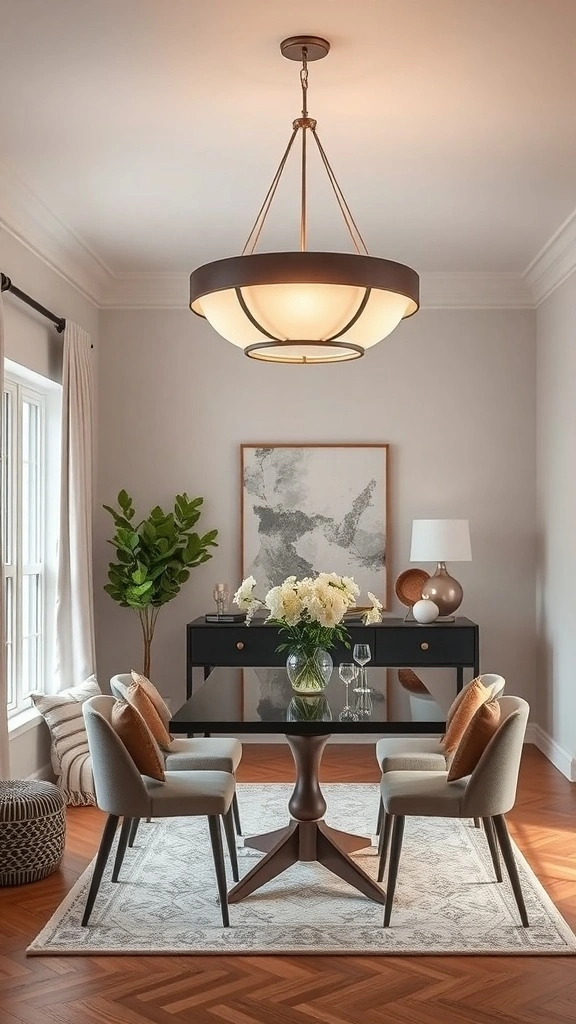
A beautiful chandelier hanging over the table instantly draws the eye. It brings loads of character to the space.
The shape and warm tones of a well-chosen fixture complement modern tables and chairs perfectly. It sets a cozy mood that makes the room feel inviting. For both family meals and dinners with friends. Swapping out a boring light for something with personality can genuinely transform a dining area from plain to memorable.
In smaller rooms, lighting also plays a clever visual trick.
A chandelier that hangs at just the right height pulls the eye upward. Creating the illusion of more space and higher ceilings. Combine that with a light, neutral color palette and the effect gets even stronger.
Just keep proportions in mind. Your light fixture should feel right for the size of the table and the room. Get that balance right, and it becomes the perfect focal point. Adding style and function at the same time.
Using Rugs to Define the Space
A well-chosen rug can do wonders in a small dining room.
It anchors the space. Adds coziness. And helps define the dining area as its own zone. Especially useful in open-concept layouts.
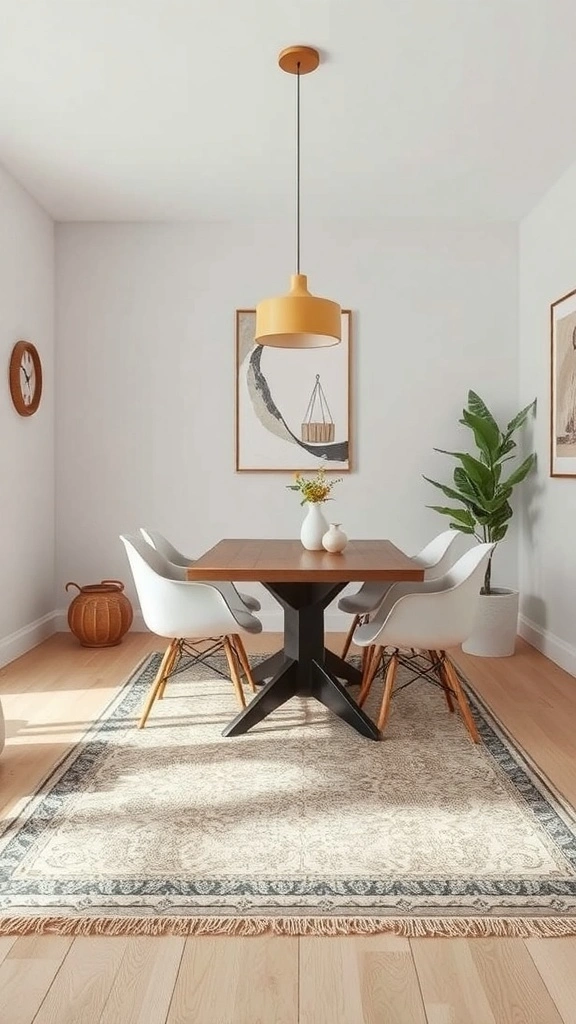
A patterned rug brings character to the room without being overpowering. When it complements the wooden table and modern chairs, it ties everything together with a nice touch of warmth. Subtle colors in the rug that echo the flooring and walls create a cohesive, pulled-together look.
Rugs are also great for visually separating the dining area from the rest of the room.
They act like a soft boundary. Guiding the eye and making the space feel more intentional and designed rather than thrown together.
When you’re shopping for a rug, size matters. You want one that’s large enough to sit comfortably under both the table and chairs. Allowing people to push their seats back without going off the edge. The right rug can take a small dining room from functional to genuinely stylish.
Choosing Space-Saving Chairs
The chairs you pick can make or break a small dining room.
Space-saving chairs are designed to tuck neatly around the table without overwhelming the room. Sleek, modern designs that complement a round table can look absolutely beautiful. While staying practical.
Light-colored chairs help brighten the space and give it an open, airy feel. Choosing chairs with a slim profile keeps sightlines clean. Really important when you’re working with limited square footage.
One of the best things about space-saving chairs is their versatility.
Many styles can slide completely under the table when you’re not using them. Instantly freeing up floor space. That’s a huge perk when you need room to move or when you’re squeezing in extra guests.
Think about materials too. Lightweight chairs are easy to rearrange. Sturdier options ensure they’ll last. Whether you lean modern or classic, there are tons of space-saving designs out there that look great in a compact dining area.
Creating a Focal Point with Art
Art has the power to completely transform a small dining room.
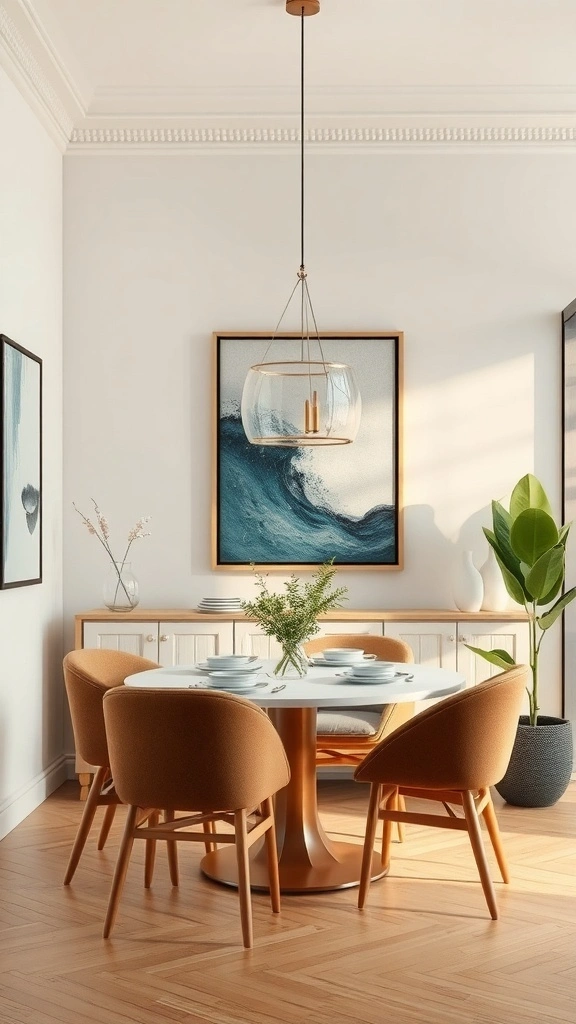
A bold, eye-catching piece on the wall instantly sets the tone. It gives the space energy and personality. Something with movement — like a wave design — can make the room feel more dynamic and alive.
When the colors in the artwork harmonize with the furniture, you get a cohesive look that feels intentional. This kind of visual harmony makes the dining area more inviting. And can easily spark great conversations during meals.
Size matters when it comes to choosing art.
A large statement piece creates a bold impact. Grouping smaller pieces together gives you a gallery wall effect. Either way, the goal is to establish a focal point that lifts the whole room.
Balancing the art with other elements — like a modern pendant light and some natural touches like plants or flowers — rounds everything out. The combination of art, lighting, and organic details creates a dining room that feels warm, stylish, and complete.
Incorporating Personal Touches
Making a dining room feel like yours is all about those personal touches.
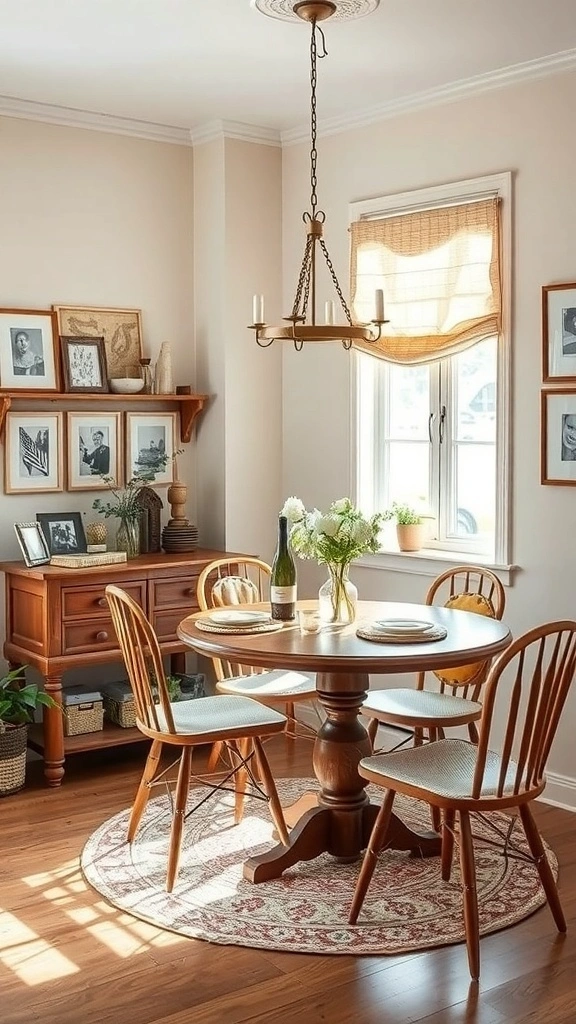
A round table naturally draws people in for conversation. Wooden chairs add that familiar, homey warmth.
Artwork that reflects your memories or travels gives the walls meaning. A simple vase of fresh flowers on the table brightens the whole room instantly. Soft lighting from a chandelier or pendant wraps everything in a warm glow. Perfect for family dinners or quiet evenings in.
Think about including items that tell your story.
Family photos. Travel keepsakes. Your favorite books on a nearby shelf. These all add layers of personality to the space. They’re the things that make a dining room feel lived-in rather than staged.
Personal touches don’t need to be complicated. Even small changes — a patterned tablecloth, a colorful centerpiece, a handmade piece of pottery — can make a big difference. Just choose things that resonate with you and create a space where you feel completely at home.
Using Transparent Furniture for Airiness
Transparent furniture is a really smart move for small dining rooms.
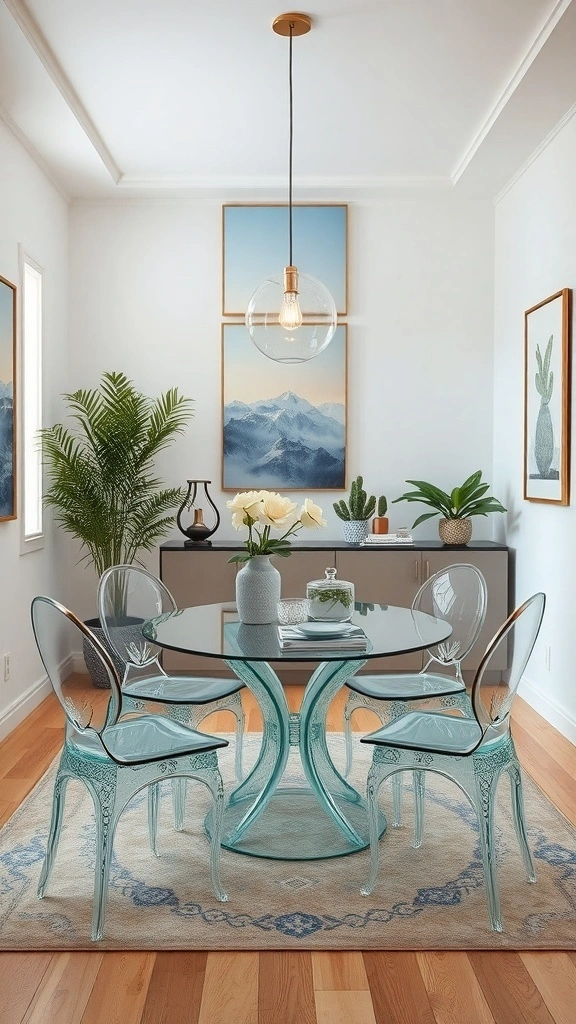
It creates a sense of openness that makes the space feel noticeably bigger. A round glass table paired with clear acrylic chairs lets light pass right through. Keeping the room feeling bright and uncluttered.
The glass table serves as a subtle focal point. It’s there, but it doesn’t visually dominate the space. Clear chairs do the same thing. Maintaining that lightweight quality. Plus, you can still appreciate whatever’s underneath — a beautiful rug, for instance — without it being hidden.
Adding greenery and framed artwork around the table enhances the inviting feel.
Plants bring natural energy. Art on the wall lifts the eye upward and makes the ceiling seem higher. This combination is ideal for anyone looking to make their small dining area feel as spacious as possible.
Mixing Vintage and Modern Styles
Blending vintage and modern elements is a wonderful way to create a dining room with real character.
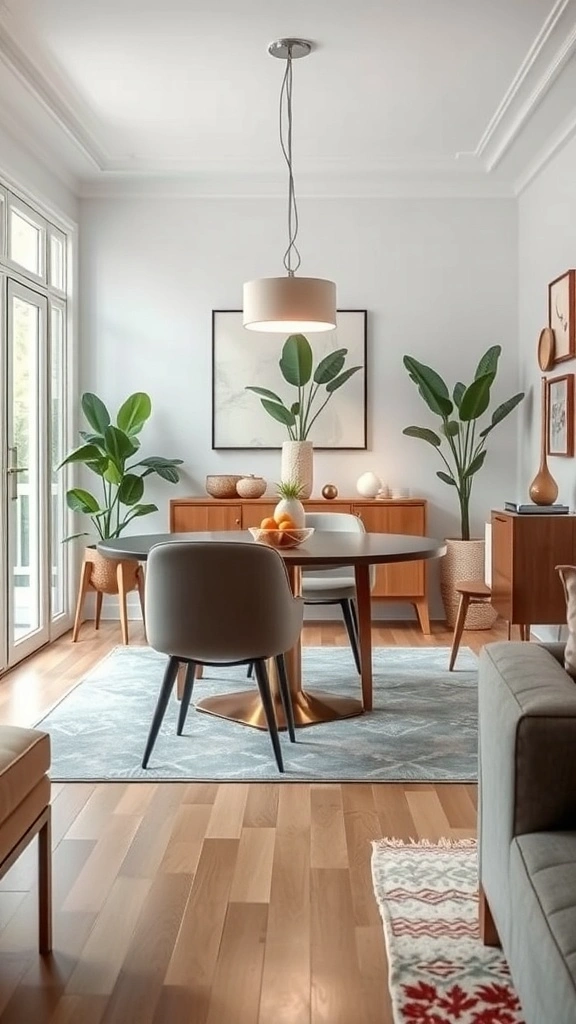
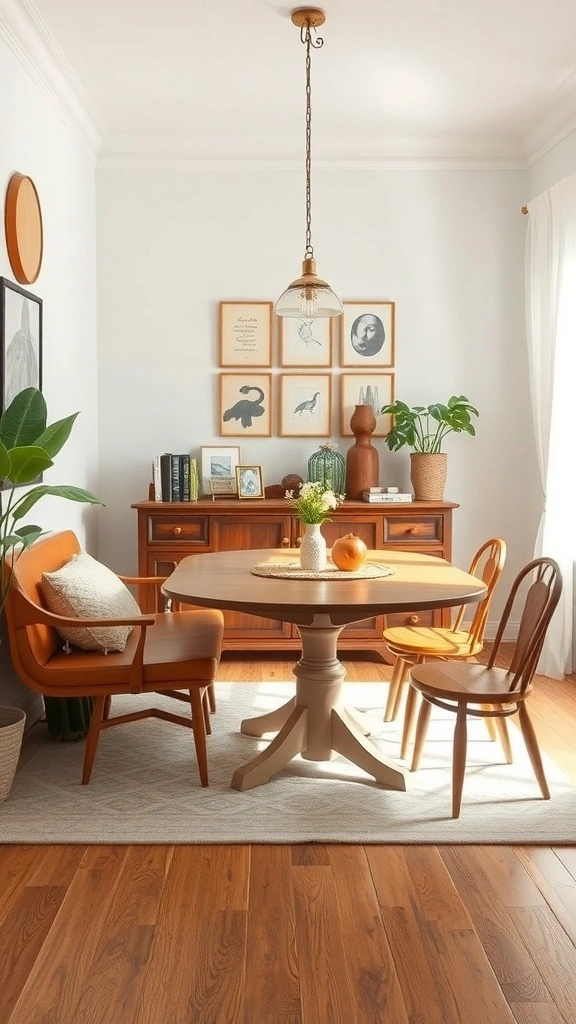
A classic round table paired with contemporary chairs brings together the best of both worlds. Warmth from the old. Freshness from the new.
Warm wood tones in the flooring and furniture lean into that vintage charm. A sleek modern light fixture overhead provides a striking contrast. This kind of balance keeps the room feeling current without losing its sense of history and soul.
Wall art that mixes different styles adds personality and charm.
Framed prints with varying aesthetics make the space feel curated and intentional. A few indoor plants round things out. Softening the overall look and creating a laid-back atmosphere.
The trick to mixing styles successfully is finding harmony. Choose pieces that complement each other. Like earthy-toned chairs with a lighter-finished table. When the elements work together, the result feels considered and effortlessly stylish.
Creating a Functional Layout
The layout of a small dining room matters more than almost anything else.
Positioning the table centrally gives everyone easy access and keeps movement smooth. It’s the kind of setup that naturally encourages good conversation.
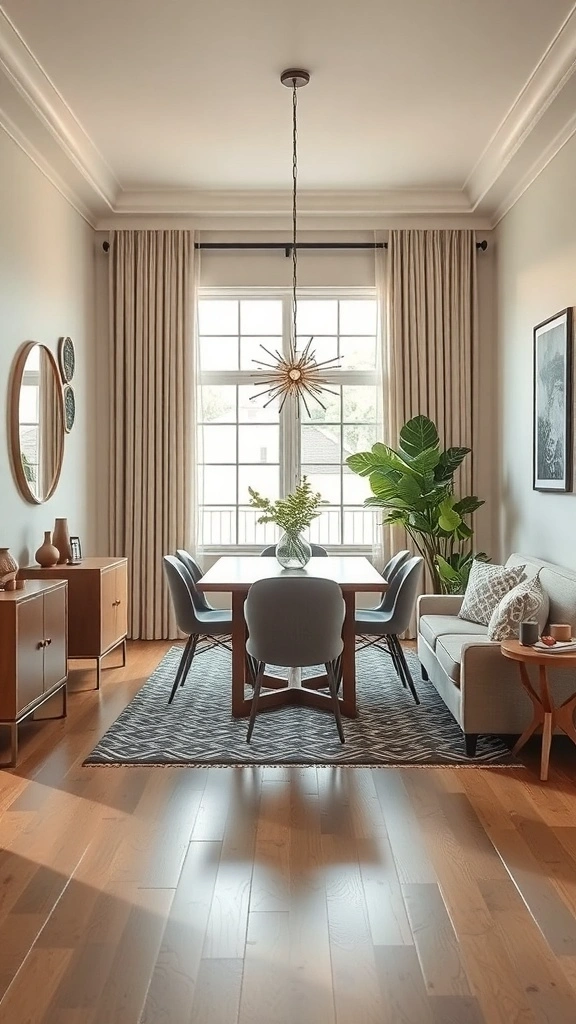
Lightweight chairs that can be tucked under the table are a must. They save space instantly when the table’s not in use. Adding a sideboard provides handy storage and a surface for decorative items. All without making the room feel crowded.
A large window flooding the space with natural light is a real game-changer.
Drawing curtains to the sides keeps things feeling breezy and open. A plant or two adds that finishing touch of freshness. Making a dining room feel truly welcoming.
A round table is another great option for tight spaces. It allows for easier movement and tucks nicely into corners. Ultimately, a well-thought-out layout proves that even the smallest dining rooms can be both functional and full of style.