
A narrow living room can feel tricky to design but it is full of potential. The right layout, smart furniture choices, and a few clever tricks can make it feel open, cozy, and completely functional. You do not need a wide room to have a beautiful one. Here are some ideas to help you get the most out of your narrow living space.
Vertical Shelving That Opens the Room Up
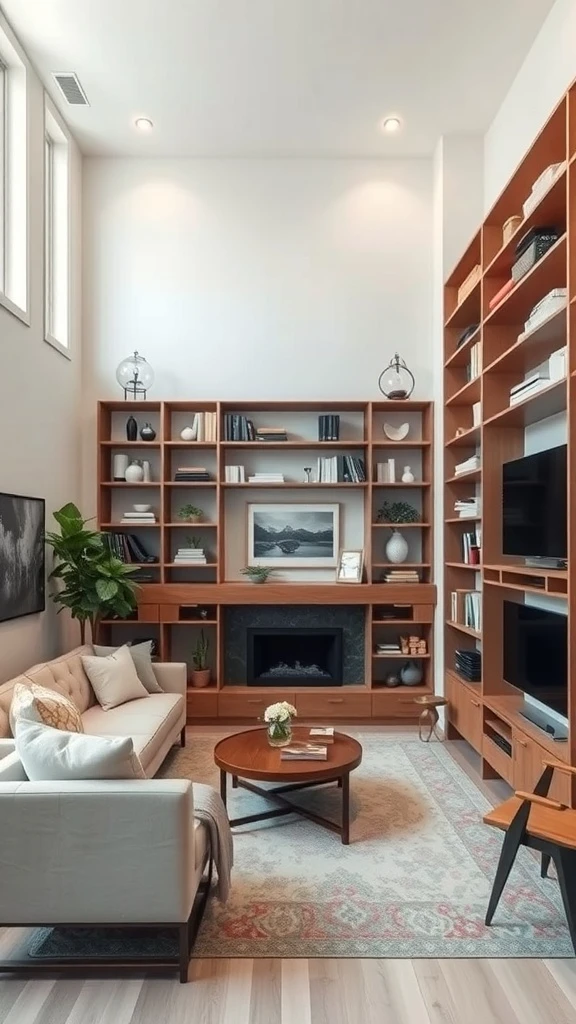
Tall shelving units flanking a fireplace filled with books, plants, and personal items. The eye travels upward and the room instantly feels taller. Warm wooden tones adding character while a cozy sofa invites you to sit down and stay.
Vertical storage turns your walls into the hardest working feature in the room. The floor stays open and the space feels twice as big.
Install tall bookshelves on either side of a focal point like a fireplace or a TV unit. Fill them with a mix of books, framed photos, small plants, and decorative objects. Keep the lower shelves for heavier items and the upper ones for lighter decorative pieces. Match the shelf tone to your other wood finishes for a cohesive feel. This vertical approach gives you serious storage and display space without pushing any furniture further into the narrow room.
Light Color Schemes That Make It Feel Bigger
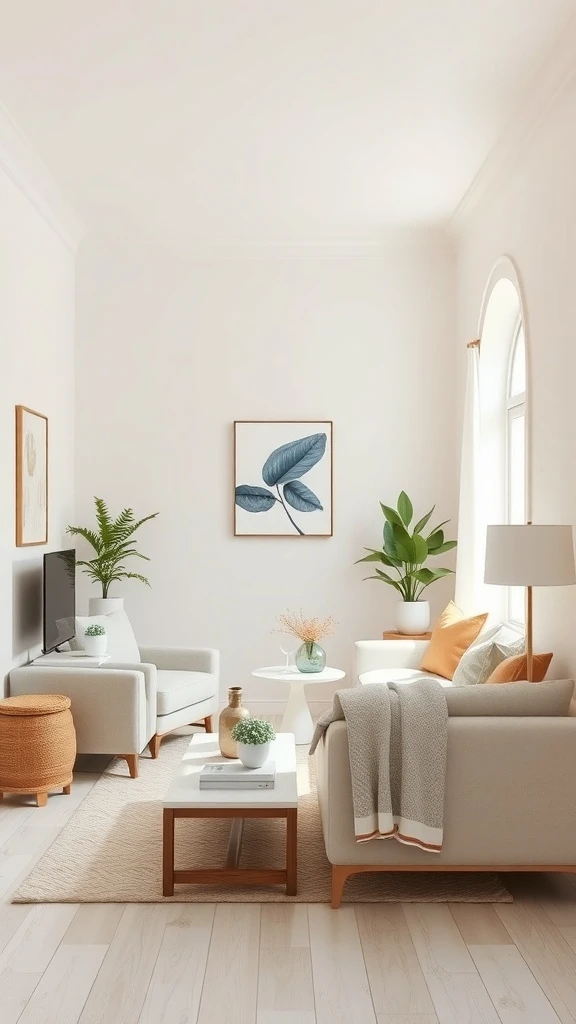
Soft whites on the walls. Pale furniture blending into the background. A couple of warm orange cushions and green plants adding just enough color to keep things interesting. Natural light bouncing off every pale surface and filling the room from end to end.
A light palette does most of the heavy lifting in a narrow room. It erases visual weight and makes everything feel airy and open.
Paint your walls in a soft white or warm cream and choose your largest furniture pieces in similar light tones. Add warmth through two or three accent colors in cushions, throws, or a small piece of art. Keep the flooring light or add a pale rug to extend the brightness across the floor. Let natural light in through sheer curtains or no coverings at all. This monochromatic-with-accents approach visually stretches the room without any structural changes.
Area Rugs That Create Zones
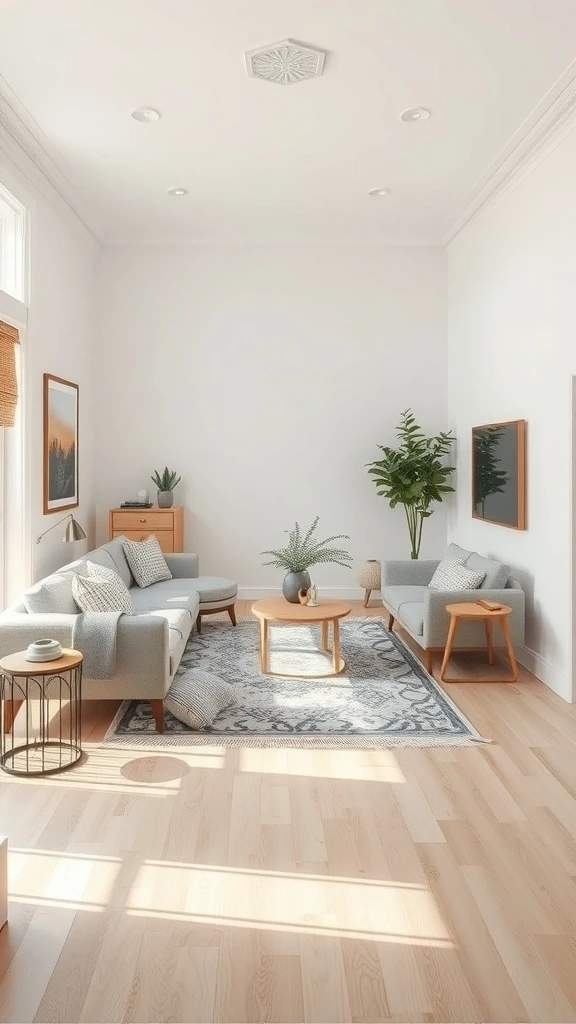
A soft rug placed under the coffee table anchoring the seating area. The space immediately feels defined and intentional. Furniture grouped on top of the rug reads as one cohesive living zone even in a long narrow room.
Rugs tell your eyes where one area ends and another begins. They divide a narrow room without walls and make every zone feel purposeful.
Choose a rug large enough to fit under the front legs of your sofa and chairs so the seating area feels unified. Pick a subtle pattern or a warm neutral that complements your flooring. If your room is long enough for two zones, use a second smaller rug to define a reading corner or a dining area. Make sure both rugs coordinate in tone so the room still flows. This zoning trick breaks up the length of a narrow room and gives each area its own identity.
Furniture Scaled to Fit the Space
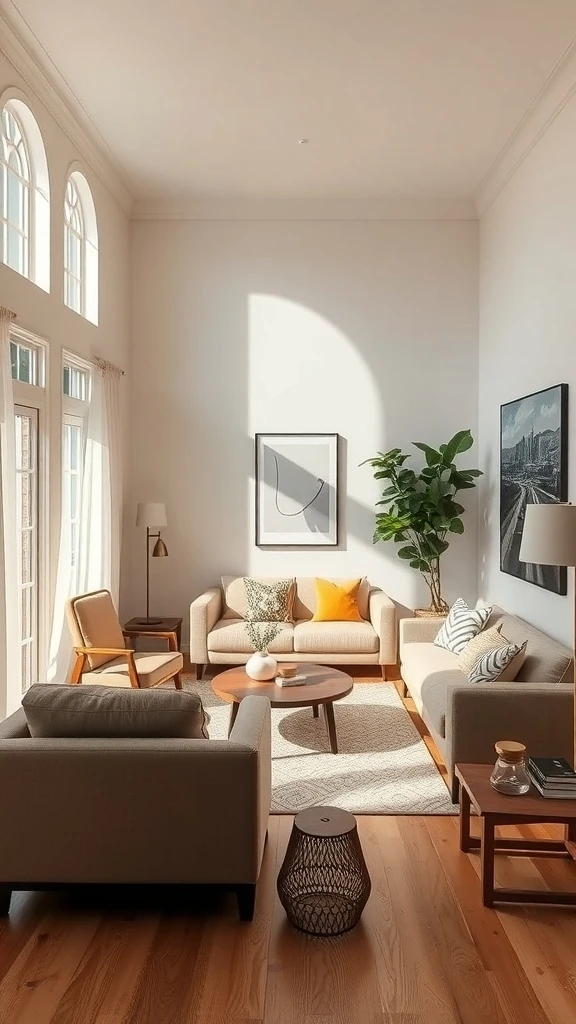
Sofas that are comfortable but not bulky. A round coffee table that softens the straight lines of the room. An accent chair in a fun color that adds personality without overwhelming the layout. Tall windows and wall art drawing the eye upward.
Choosing furniture that fits the scale of a narrow room makes everything feel balanced. Nothing crowds the walkway and the room breathes.
Avoid oversized sectionals and choose a slim-profile sofa that leaves at least 18 inches of clear walkway on each side. Use a round or oval coffee table instead of a rectangular one to eliminate sharp corners and improve flow. Add one accent chair in a lighter frame that can be moved easily. Keep side tables slim and tall rather than wide. Place your largest piece against the longest wall so the center of the room stays open for movement.
Layered Lighting for Depth and Warmth
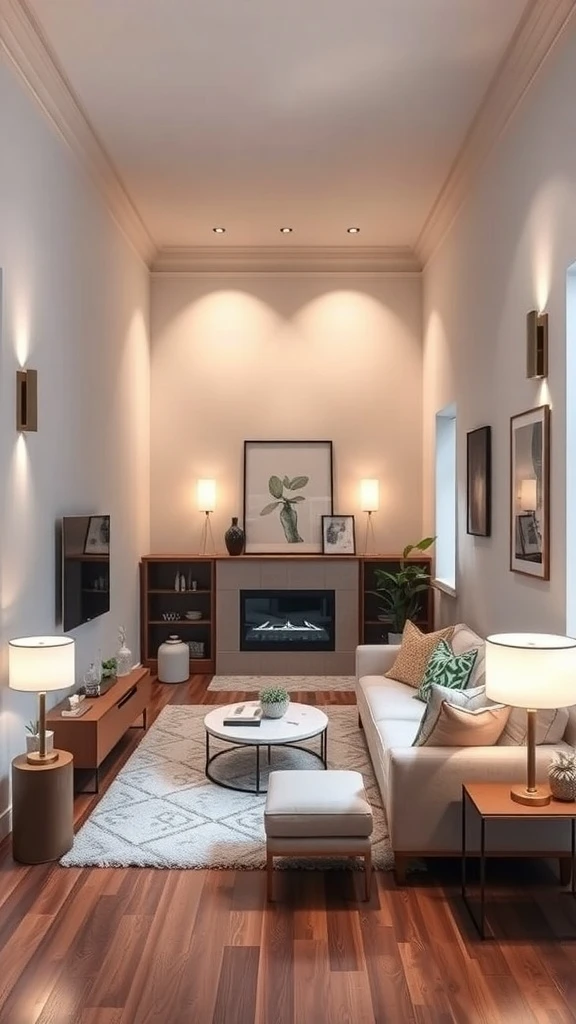
Recessed ceiling lights providing overall brightness. Table lamps casting warm pools of light in the seating area. Wall sconces highlighting artwork and adding depth to the walls. Each light source working together to make the narrow room feel full and alive.
Good lighting makes a narrow room feel wider because it eliminates dark corners where the walls seem to close in.
Start with your overhead or recessed fixtures for general ambient light. Add a table lamp on a side table or a console for warm focused light near the sofa. Mount a wall sconce or picture light above your art to create a visual focal point. Use warm white bulbs in every fixture for a consistent cozy tone. Install dimmers so you can shift from bright and functional during the day to soft and relaxing at night. This layered approach adds dimension and keeps the narrow room from ever feeling flat.
Mirrors That Add Depth and Light
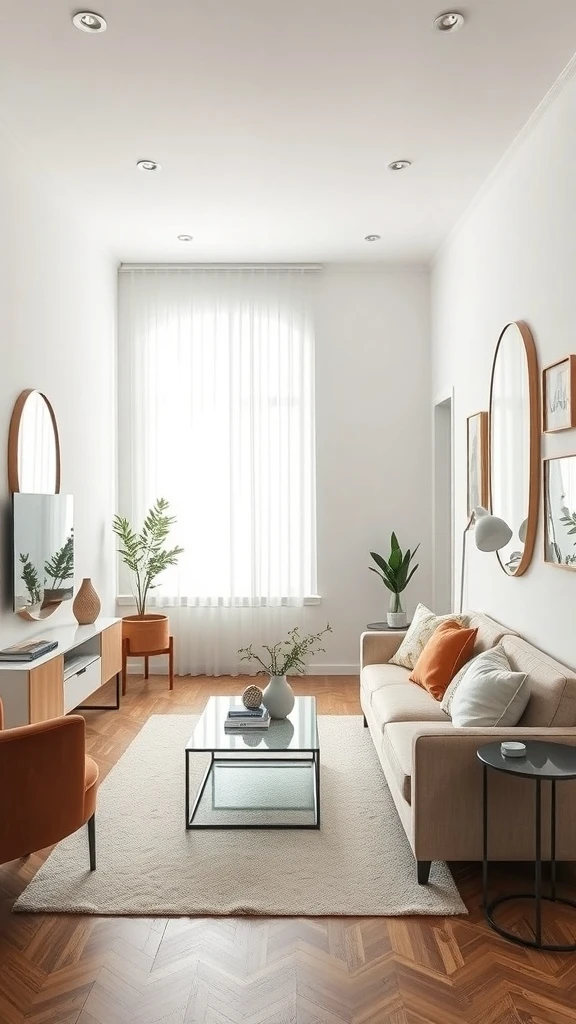
Round mirrors on the wall reflecting light and making the room feel like it extends beyond the walls. Warm-toned furniture contrasting beautifully with the reflective surfaces. The whole room feels deeper and brighter than its actual dimensions.
Mirrors are the oldest trick for making narrow spaces feel wide open. They double the light and trick the eye into seeing more room.
Hang one or two mirrors on the longest wall or opposite a window where they will reflect the most natural light. Choose round or organic shapes to soften the straight lines of a narrow room. Use frames that complement your existing decor in gold, wood, or black. Position them at eye level or slightly higher so they reflect the brightest part of the space. One well-placed mirror can change how the entire room feels without moving a single piece of furniture.
Flexible Seating That Adapts
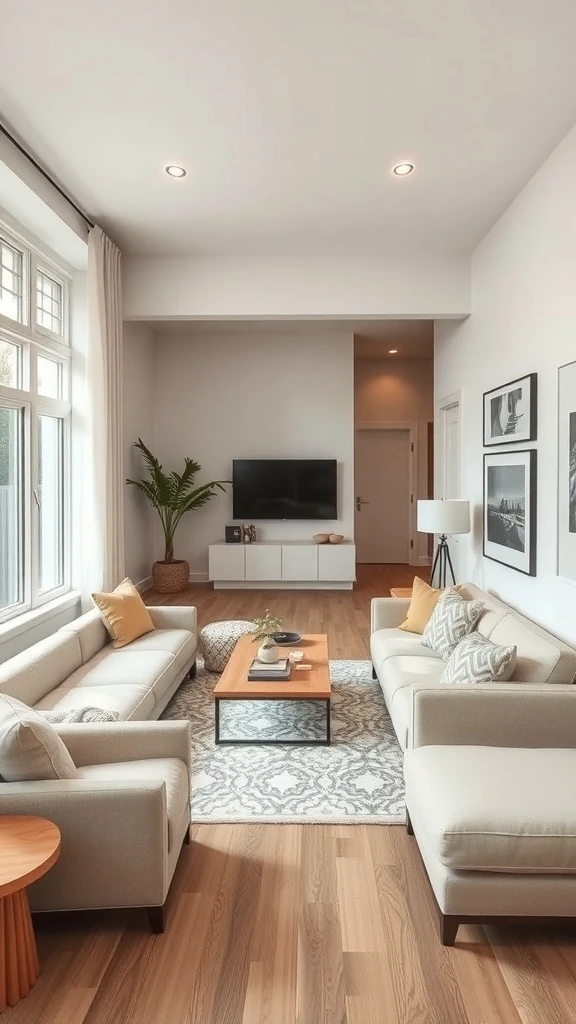
Two sofas facing each other creating a conversation-friendly layout. A small accent chair tucked in the corner for extra seating. A round side table softening the lines. Natural light flooding in from large windows and plants adding freshness.
Flexible seating means you can rearrange for movie night, a gathering, or a quiet evening without the room feeling wrong. It adapts to how you live.
Position two slim sofas facing each other with a coffee table in between for an open conversational layout. Add one lightweight accent chair that can be moved easily when you need more floor space. Use a round side table instead of a bulky end table. Place a plant in the corner to fill vertical space without adding furniture weight. This symmetrical face-to-face arrangement works perfectly in a narrow room because it uses the length while keeping the width clear.
Smart Layout That Maximizes Every Inch
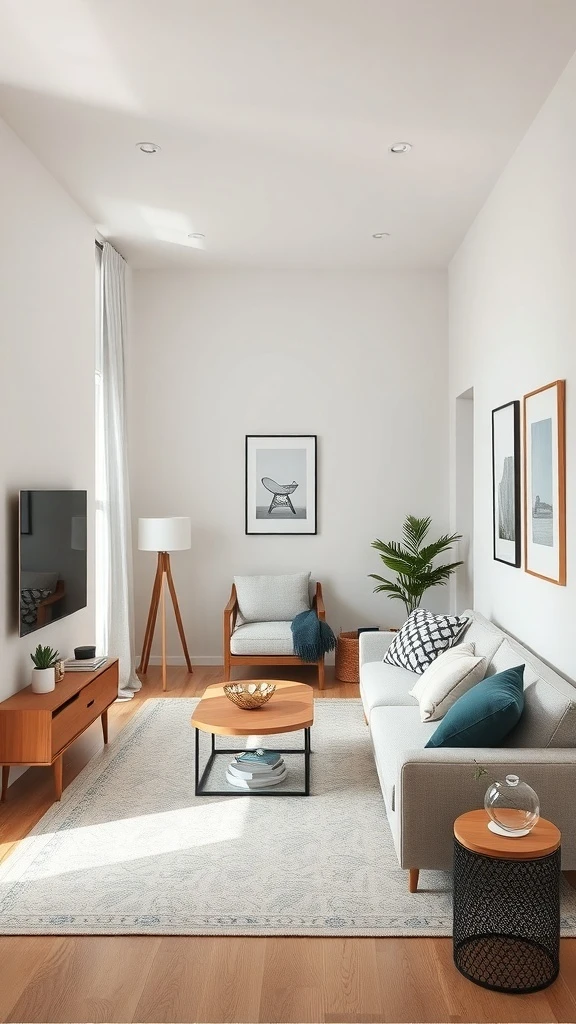
The sofa against the longest wall. A round coffee table in the center allowing easy navigation. Tall art and a floor lamp drawing the eye upward. A plant in the corner filling empty space with life instead of furniture.
Every piece is placed with purpose. Nothing blocks the flow and nothing wastes space. The room feels bigger than it actually is because the layout is so thoughtful.
Push your main sofa against the longest wall to open up the floor. Choose a round or oval coffee table so you can walk around it easily from any angle. Place a tall floor lamp behind the sofa for light that does not take up table space. Hang art at a height that draws the eye upward. Keep the opposite wall minimal with just one slim console or a floating shelf. This streamlined approach makes a narrow room feel spacious and effortlessly styled.
Technology That Blends Right In
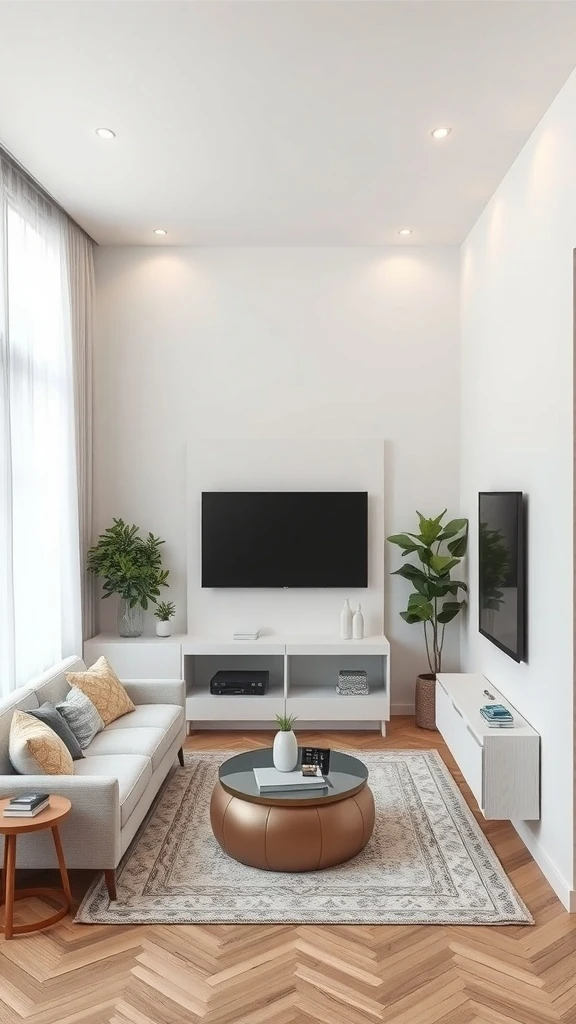
A wall-mounted TV freeing up the floor where a stand used to be. A sleek media console below it keeping everything organized. Recessed lighting and plants softening the tech-heavy look. The room feels modern and clean.
When technology disappears into the design the room feels like a living space first and an entertainment center second. That balance matters in a narrow room.
Mount your TV on the wall to eliminate a bulky TV stand and free up valuable floor space. Use a slim floating media console below for a streaming device, remotes, and a couple of decorative items. Route cables behind the wall or through a cord cover for a clean look. Add a plant or two near the media area to soften the technology with natural texture. Use recessed or ambient lighting so the TV wall does not dominate the room visually. This integrated approach keeps the room feeling balanced and open.
Window Treatments That Let the Light In
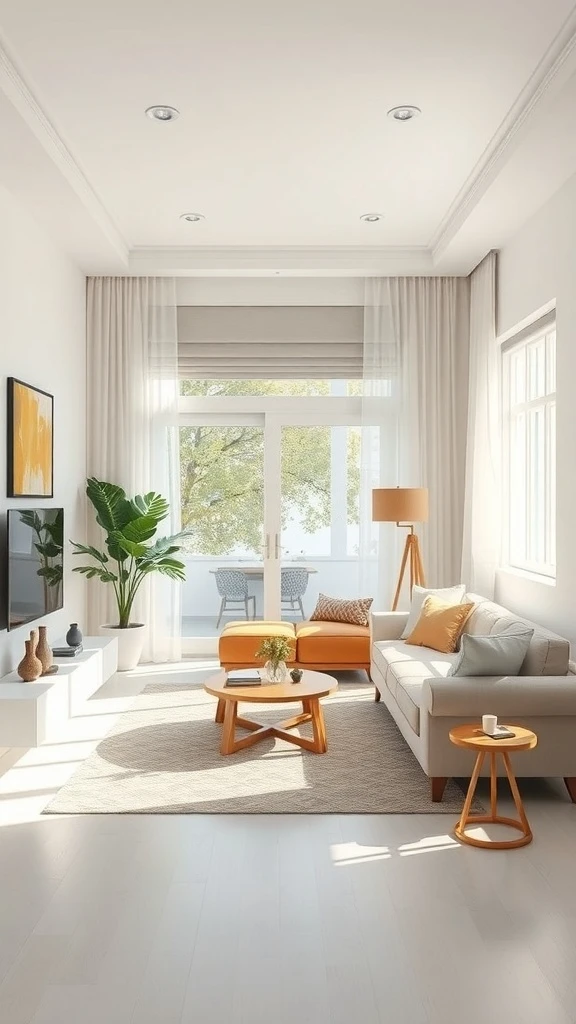
Sheer curtains filtering soft light throughout the room. Hung high above the window frame making the ceiling seem taller. The fabric is light and airy and never blocks the brightness coming through.
Natural light is the best friend of a narrow room. The right window treatment lets it pour in while still giving you softness and privacy.
Hang your curtain rod as close to the ceiling as possible and extend it a few inches beyond the window frame on each side. Choose sheer or lightweight linen curtains in white or a very pale tone. Let them brush the floor for an elegant look that elongates the wall. Pull them open fully during the day to let maximum light in. For more control layer sheer panels with a simple roller blind behind them. This approach makes windows look bigger and ceilings look taller which is exactly what a narrow room needs.
Plants That Fill the Room with Life
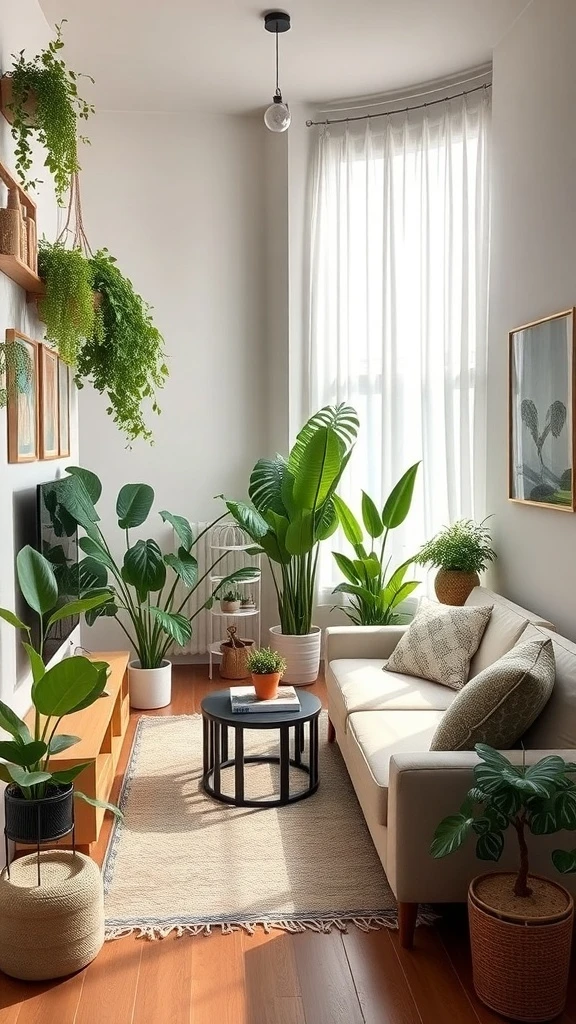
Tall plants reaching toward the ceiling in the corner. Smaller pots on shelves and side tables. Hanging greenery trailing from a high spot. The narrow room feels lush and alive without a single extra piece of furniture being added.
Plants fill vertical space beautifully. They add color and texture and make the air feel fresher. A narrow room with green in every corner feels open and natural.
Place one tall floor plant like a fiddle leaf fig or a bird of paradise in the corner where it draws the eye upward. Set smaller pots on shelves, side tables, or the windowsill to spread green throughout the room. Hang a trailing plant from a high hook or a tall shelf for dramatic effect. Choose low-maintenance varieties that handle indoor conditions well. Three to five plants at different heights gives a narrow room the perfect amount of life without competing with your furniture for floor space.
Built-In Features for a Clean Look
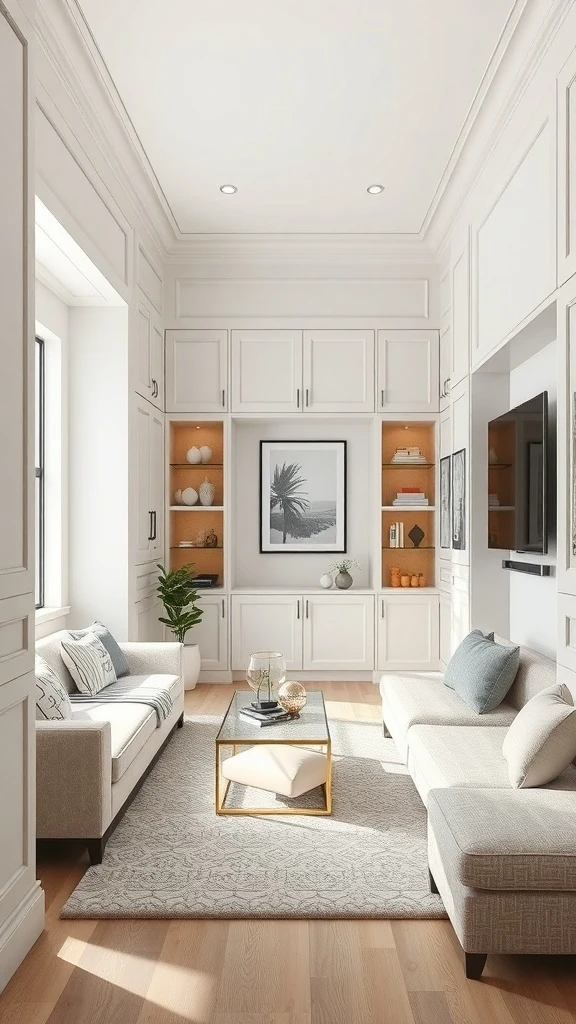
Built-in shelves and cabinets running along one wall in a light finish. Everything stored neatly behind closed doors or displayed on open shelves. The floor stays completely clear. The room reads as one smooth designed space.
Built-ins turn your wall into both storage and decor. They eliminate the need for separate bookcases and cabinets that push into the narrow walkway.
Install built-in cabinetry along one wall from floor to ceiling in a light color that matches or blends with your walls. Use the lower section for closed storage and the upper shelves for display pieces, books, and plants. Keep the furniture on the opposite wall slim and simple so the room does not feel closed in. A built-in unit can also frame a TV or a fireplace to create a polished focal wall. This custom look gives you maximum storage in minimum depth which is exactly what a narrow room needs.
Decluttering for a Clean Streamlined Feel
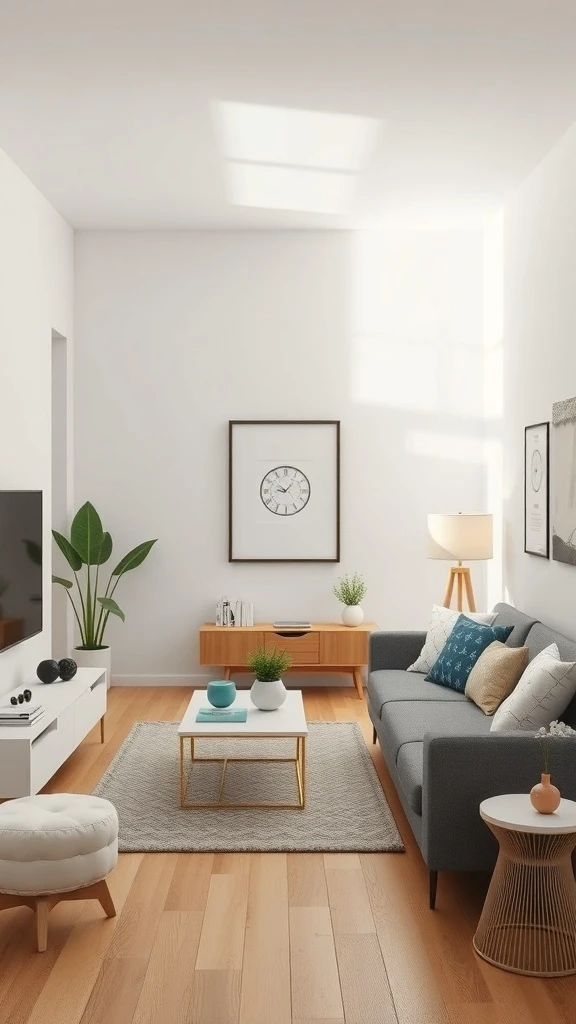
A sleek sofa against the wall. A simple coffee table with nothing extra on it. One plant in the corner. A clock and a piece of art on the wall. That is it. The room feels calm and spacious because nothing unnecessary is competing for attention.
In a narrow room, less truly is more. Every item you remove opens the space up a little further.
Start by removing anything from the room that does not belong or serve a purpose. Choose a coffee table with hidden storage for remotes and magazines. Use decorative baskets or boxes for small items you want accessible but hidden. Limit surface decor to one or two items per surface. Keep the walls clean with just a couple of well-placed pieces of art. A narrow room that is free of clutter instantly feels bigger, calmer, and more welcoming.
Multi-Functional Furniture That Works Harder
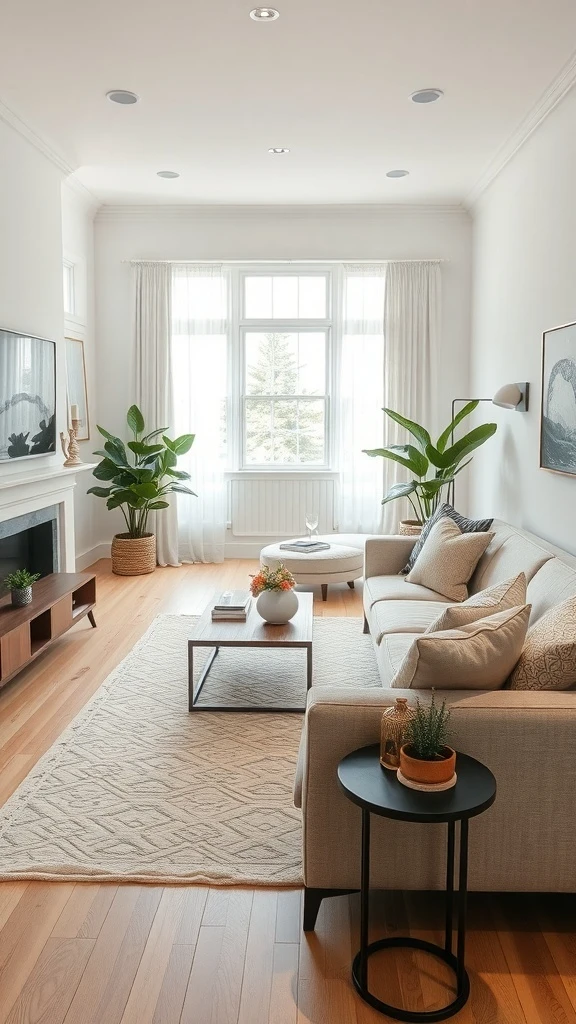
A coffee table that stores blankets inside. A sofa that converts for sleeping. A round side table that moves easily from one spot to another. Light curtains letting the sun pour in. Plants reaching up to fill the vertical space.
When every piece of furniture does double duty you need fewer items in the room. Fewer items means more space and a narrow room that actually breathes.
Choose a coffee table with a lift top or interior storage for hidden organization. Pick a sofa with a pull-out bed if you host guests. Use nesting tables that tuck together when not needed and spread out when you are entertaining. Add a storage ottoman that serves as both seating and a hidden supply closet. Keep everything in light tones with clean lines so nothing feels heavy. Multi-functional pieces are the key to making a narrow living room work without ever feeling crowded.
Art and Decor That Show Your Style
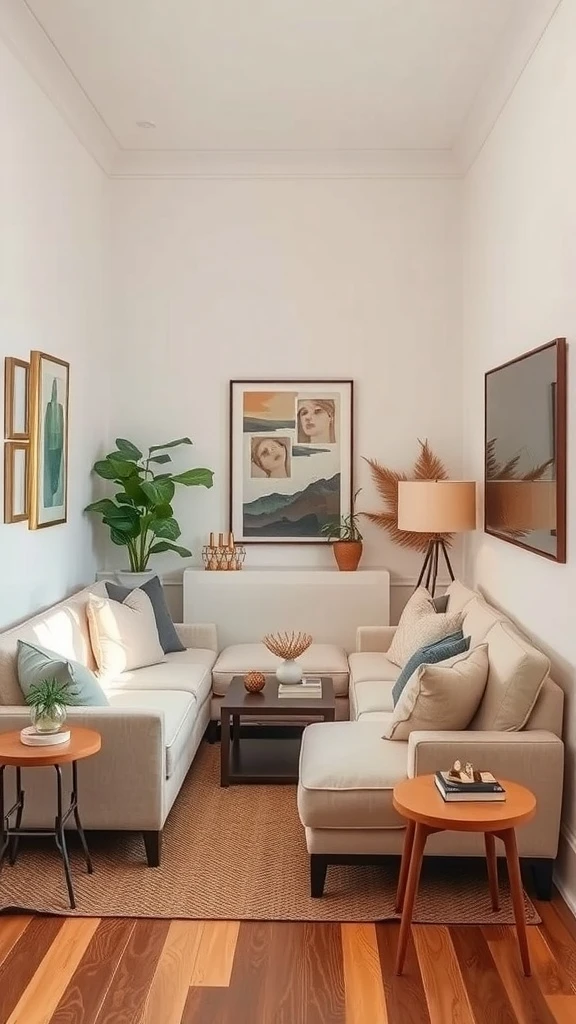
Framed pieces on the wall adding personality. A stylish lamp casting warm light over the sofa. A coffee table with carefully chosen accessories. A green plant softening one corner. Every item feels intentional and personal.
Art and decor are what turn a narrow living room from just a space into your space. A few meaningful pieces go further than a room full of stuff.
Hang two or three pieces of art that you genuinely love on the most visible wall. Keep frames coordinated in tone for a cohesive gallery feel. Place one statement lamp beside the sofa for warm focused light and visual interest. Style your coffee table with just a candle, a small plant, and one decorative object. Add a plant in the corner that does not block the walkway. Choose quality over quantity with every item and let the room stay open while still feeling full of personality.
A Layout That Encourages Flow
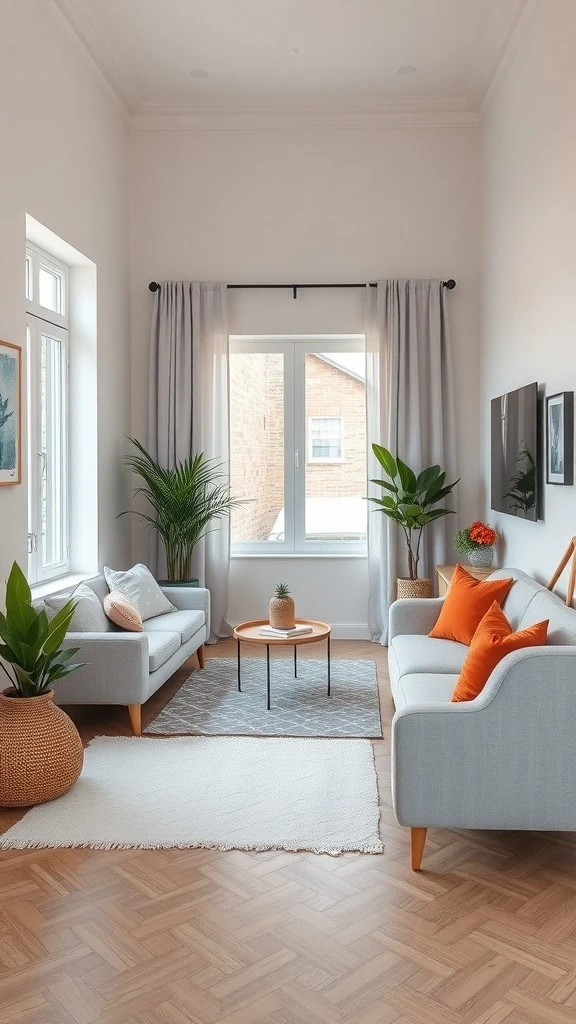
Two sofas facing each other with a round coffee table between them. A large window filling the room with natural light. Layered rugs defining the seating area. Plants in the corners keeping the space alive.
The layout lets you walk from one end of the room to the other without bumping into anything. Everything flows and nothing blocks the path. That is the goal in a narrow room.
Keep your main walkway at least 18 inches wide from the furniture to the opposite wall. Position sofas parallel to the long walls facing each other for a natural conversation layout. Use a round coffee table in the center so movement flows easily in every direction. Place a rug under the seating area to anchor it visually. Keep the ends of the room light with just a plant or a slim side table. This layout prioritizes movement and openness while still being comfortable and inviting.
A Room Designed for Family Time
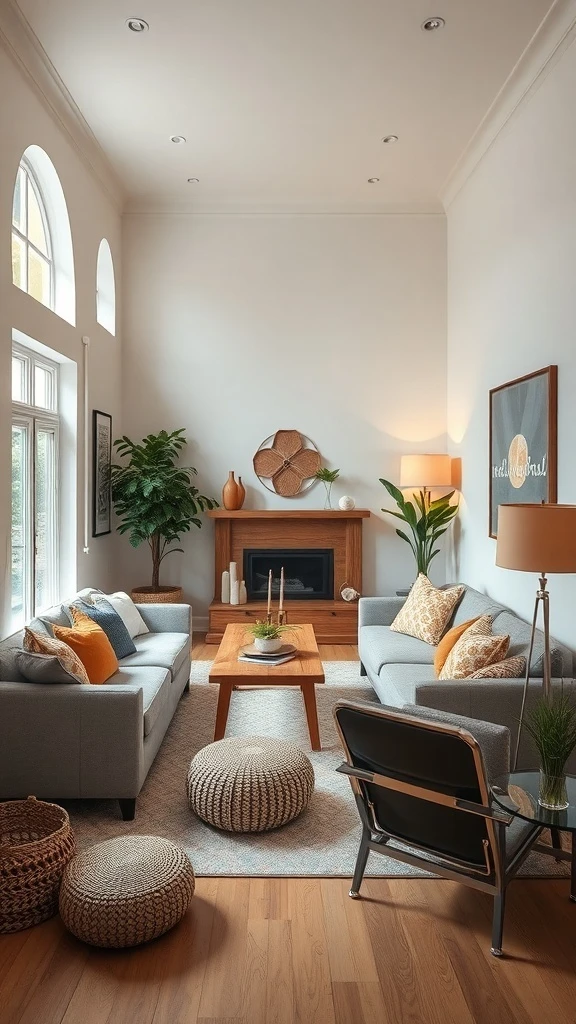
Two cozy sofas facing each other so everyone can talk and connect. A coffee table in the middle perfect for snacks and games. Soft cushions and poufs adding extra comfort. Natural light flooding through tall windows and plants bringing life to every corner.
The narrow room becomes a gathering space where the family actually hangs out together. That is what good design does. It brings people closer.
Arrange your sofas face to face with a sturdy coffee table between them that can handle board games and snacks. Add a couple of poufs or floor cushions for extra seating when the kids have friends over. Keep the coffee table low enough for little ones to sit around comfortably. Use soft durable fabrics that can handle daily family life. Place plants near the windows where they get light and add a warm blanket on each sofa for movie nights. This family-centered layout makes a narrow room the most social space in the house.
An Entryway That Sets the Tone
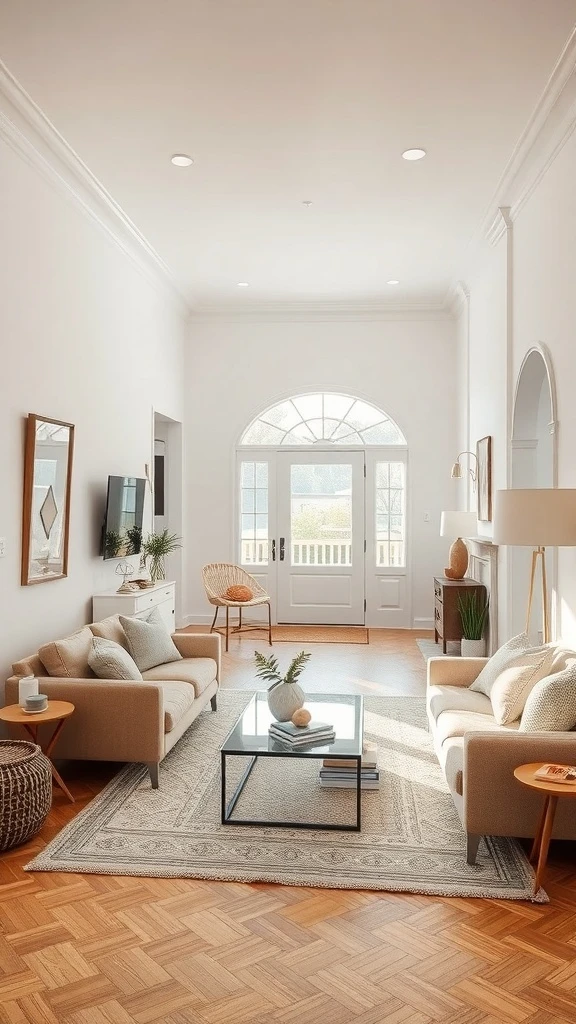
Stepping into the room and immediately feeling welcomed. Light walls and wooden floors. Two sofas with a coffee table between them. Framed photos and a plant giving the room personality right from the first glance.
The entrance of a narrow living room matters because it is the first thing you and your guests see. Make it count.
Keep the area nearest the door clear of bulky furniture so the entrance feels open. Place your first piece of furniture at least a couple of feet from the doorway. Use a small console table or a slim bench near the entrance for keys and a plant. Hang a mirror or a piece of art on the wall facing the door so there is something beautiful to see the moment you walk in. This first impression sets the mood for the entire room.
Textured Layers That Add Warmth
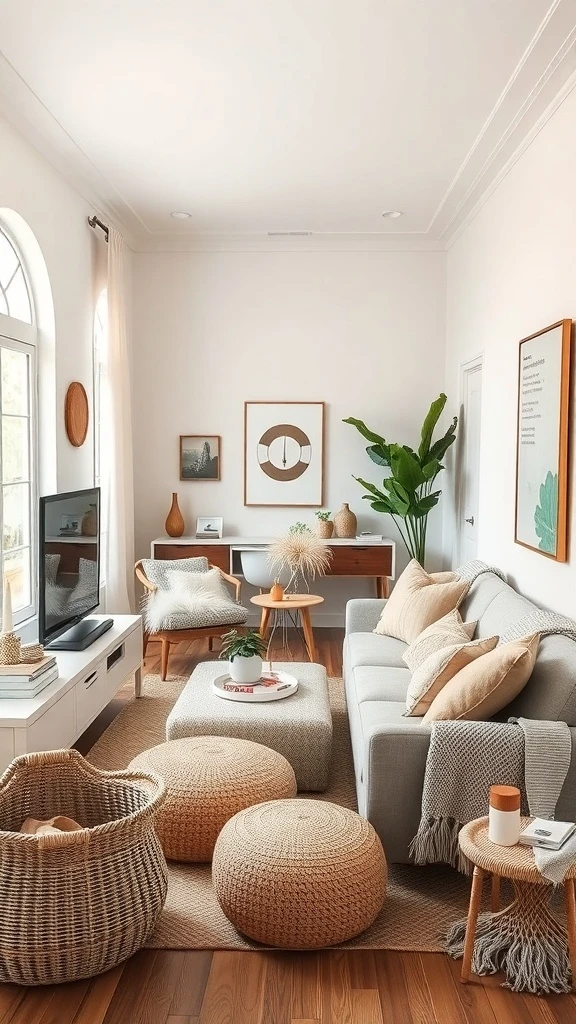
A soft knitted throw on the sofa. Woven poufs on the floor. A natural fiber basket beside the couch. Plush cushions in different fabrics piled up. Wooden accents and green plants rounding out the warmth.
Textiles and textures make a narrow room feel rich and inviting instead of cold and tight. They soften every hard edge and add depth to every surface.
Start with a cozy throw blanket draped over the sofa arm in a chunky knit or soft cotton. Add three or four cushions in mixed textures like linen, velvet, and woven fabric. Place a natural fiber rug under the seating area for warmth underfoot. Add a woven basket beside the sofa for blanket storage that doubles as decor. Use a wooden side table and a couple of ceramic pots for plants. These layered textures make a narrow living room feel like a warm embrace the moment you sit down.
A Cozy Nook Within the Room
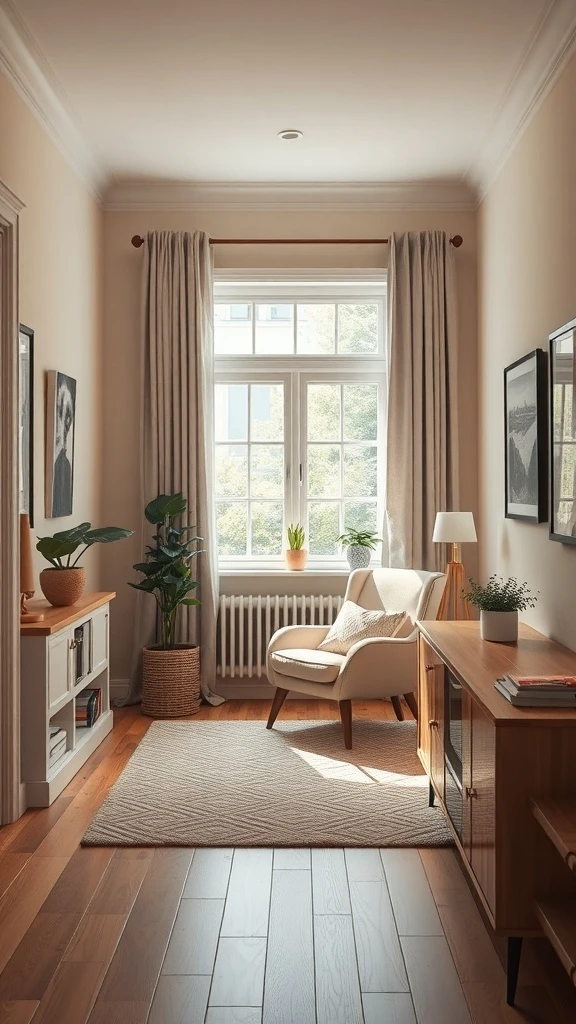
A comfortable chair placed beside the window catching the best light. A small side table holding a coffee cup. A low cabinet with a plant and a couple of personal items. A soft rug defining the little zone. It is a room within a room.
Creating a cozy nook inside a narrow living room gives you a spot that feels completely your own. A place to read, think, or just breathe.
Choose the end of the room with the best natural light and place a comfortable armchair there. Add a small round side table for your drink and a book. Lay a soft rug underneath to define the nook as its own zone. Place a low cabinet or a floating shelf nearby for a plant and a candle. Keep this corner separate from the main seating area so it feels like a private retreat within the larger room. This dedicated nook adds function and soul to your narrow living room.
Bold Color Blocking for Visual Interest
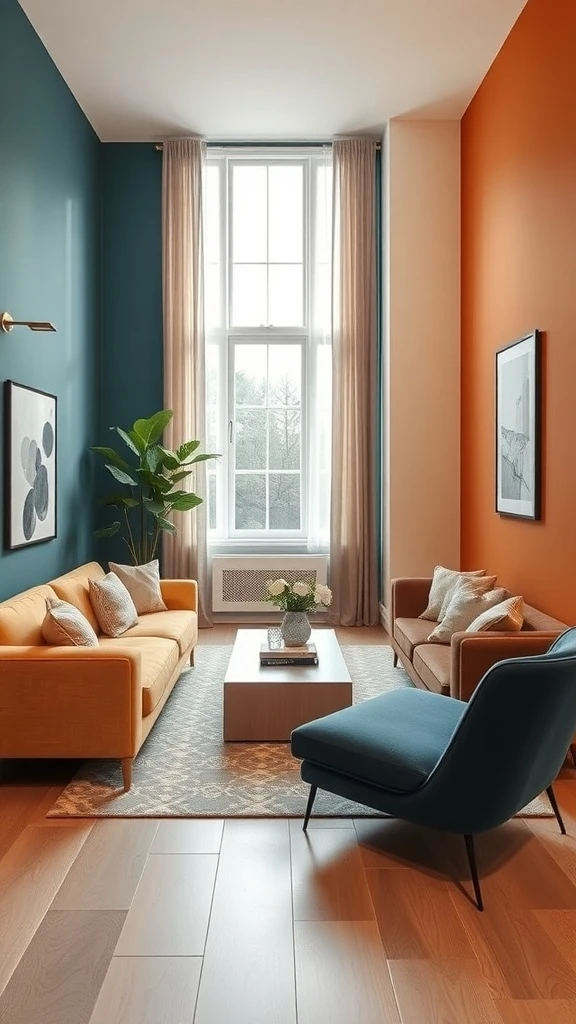
A deep teal wall on one side. A warm orange on the other. An orange sofa and a blue accent chair playing off the colors around them. Natural light streaming in and making every bold shade glow. Plants breaking up the color blocks with fresh green.
Color blocking in a narrow room is unexpected and exciting. It gives the space energy and personality that neutral walls alone cannot achieve.
Paint two opposite walls in contrasting bold colors like teal and warm orange or navy and mustard. Keep the ceiling and floor light so the bold walls do not close in the room. Choose one piece of furniture that echoes one wall color and one accessory that echoes the other. Add plants to soften the bold tones with natural green. Let the large window light amplify the colors naturally. This brave approach turns a narrow living room into the most visually dynamic space in your home.