
A small closet can work just as hard as a big one when you organize it the right way. Smart storage, a clear system, and a few clever tools turn a cramped space into something that actually makes getting ready easier. You do not need a walk-in to have a closet that works beautifully. Here are some ideas to help you organize every inch of your small closet.
Maximizing Vertical Space
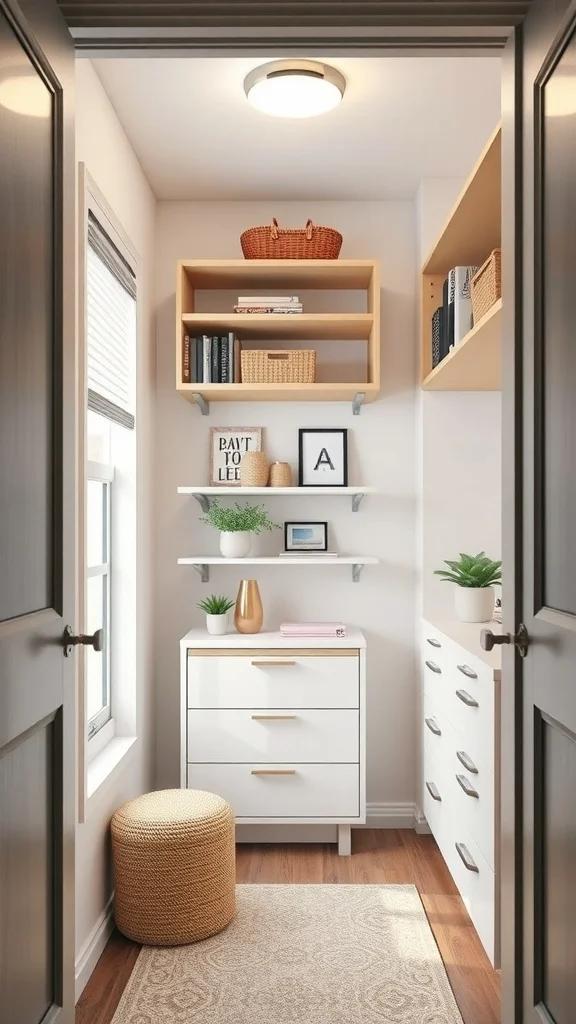
Shelves installed all the way up to the ceiling holding baskets, books, and a small plant. Drawers below keeping daily essentials organized. A stool tucked in for reaching the top shelf. Every inch from floor to ceiling doing something useful.
Most small closets waste the space above eye level. Going vertical changes everything and gives you storage you did not know you had.
Install shelves as high as the ceiling allows and use the top ones for items you do not need every day like seasonal pieces or spare linens. Place woven baskets on the highest shelves so items stay contained and easy to pull down. Use the mid-level shelves for daily items and a small decorative touch like a plant to keep the space feeling personal. Add drawers below for folded clothes and accessories. Keep a step stool inside the closet for comfortable access to the top. This vertical approach doubles your usable storage without expanding the closet footprint at all.
Over-the-Door Organizers
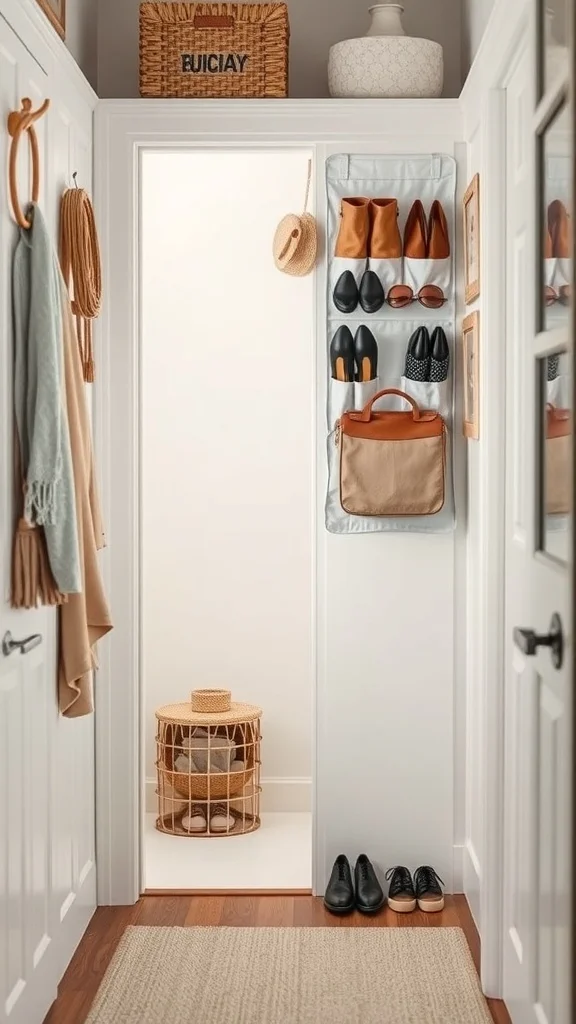
An organizer hanging on the back of the closet door with clear pockets holding shoes, bags, and accessories. Everything visible at a glance. Nothing lost at the bottom of the closet anymore. The door itself becomes a wall of storage.
The back of the door is prime real estate in a small closet and most people forget it is there. One organizer changes that instantly.
Hang an over-the-door organizer with clear or mesh pockets on the inside of your closet door. Use the top pockets for accessories like scarves, belts, and sunglasses. Fill the middle pockets with shoes you wear often. Use the bottom pockets for items like bags or hats. Choose an organizer with sturdy hooks that do not damage the door. This one addition frees up shelf and floor space inside the closet while keeping everything easy to find at a glance.
Drawer Dividers for Small Items
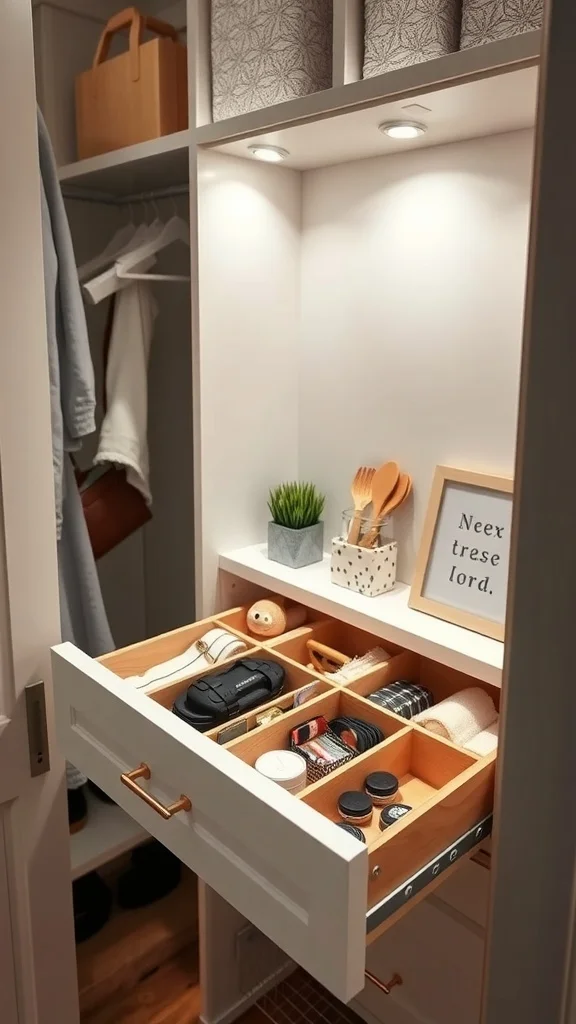
A drawer neatly divided into compartments holding socks, underwear, jewelry, and small accessories. Every item in its own slot. Nothing tangled or lost. You open the drawer and see exactly what you have.
Drawer dividers bring order to the messiest part of any closet. They turn a jumbled drawer into a system that saves you time every morning.
Buy adjustable drawer dividers or small compartment trays that fit your drawer dimensions. Assign each section a specific category like socks in one row, underwear in another, and accessories in a third. Fold or roll items neatly so they stand upright and stay visible. Replace dividers if they shift over time to keep the system tight. This simple organizational tool keeps small items from becoming a tangled pile and makes getting dressed a faster, smoother experience.
Baskets for Clutter Control
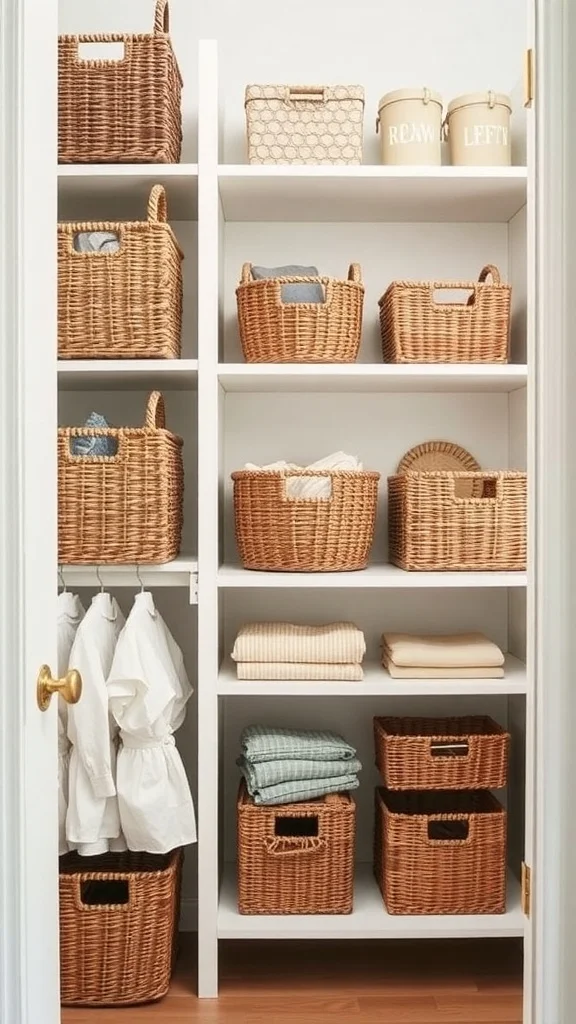
Woven baskets in different sizes sitting on shelves and the closet floor. Each one holding a category of items like linens, accessories, or seasonal clothes. Labels on the front making it easy to know what is inside without opening anything.
Baskets hide the mess while looking beautiful. They are storage and decor at the same time and they keep a small closet feeling calm.
Choose baskets in a consistent style like woven natural fiber or fabric bins that match your closet’s look. Assign each basket a specific purpose and label it so you always know where things belong. Place larger baskets on lower shelves for bulkier items and smaller ones on higher shelves for accessories. Use open-top baskets for items you reach for often and lidded ones for things you access less frequently. This basket system keeps everything contained and makes even the smallest closet look organized and intentional.
Clear Storage Containers
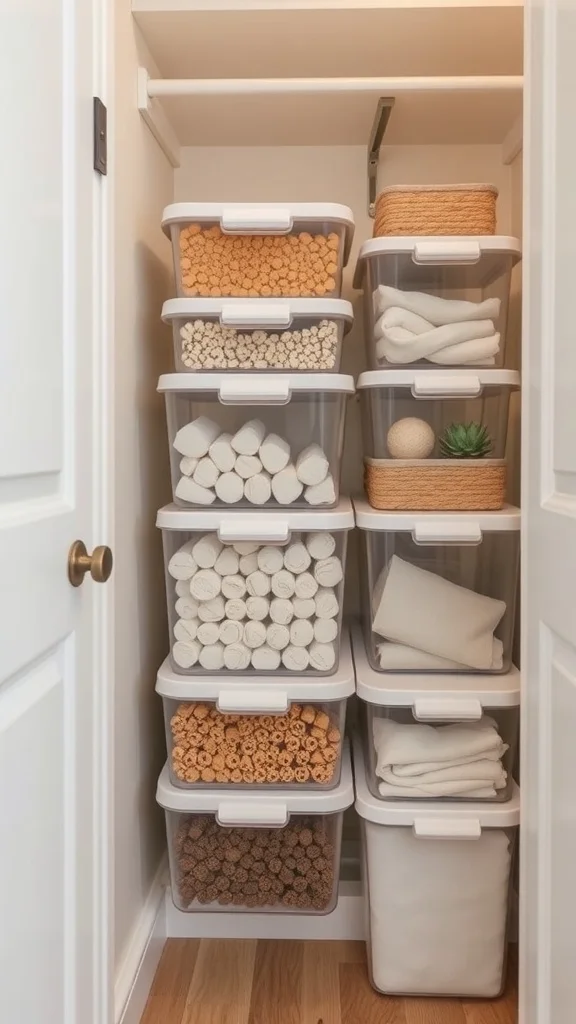
Clear plastic containers stacked neatly on shelves. Rolled towels in one. Decorative items in another. Everything visible through the sides without opening a single lid. The closet looks clean and you can find anything in seconds.
Clear containers take the guesswork out of storage. You see what is inside without searching and the uniform shape stacks perfectly.
Choose clear containers in matching sizes that stack well on your closet shelves. Group similar items together like one container for workout clothes, another for accessories, and one for extra linens. Label each container even though it is clear so the system stays consistent. Stack them vertically to use the full height of your shelves. Choose containers with snap-on lids to keep dust out and contents secure. This transparent approach keeps everything visible, protected, and neatly contained in even the smallest closet.
Utilizing Slim Hangers
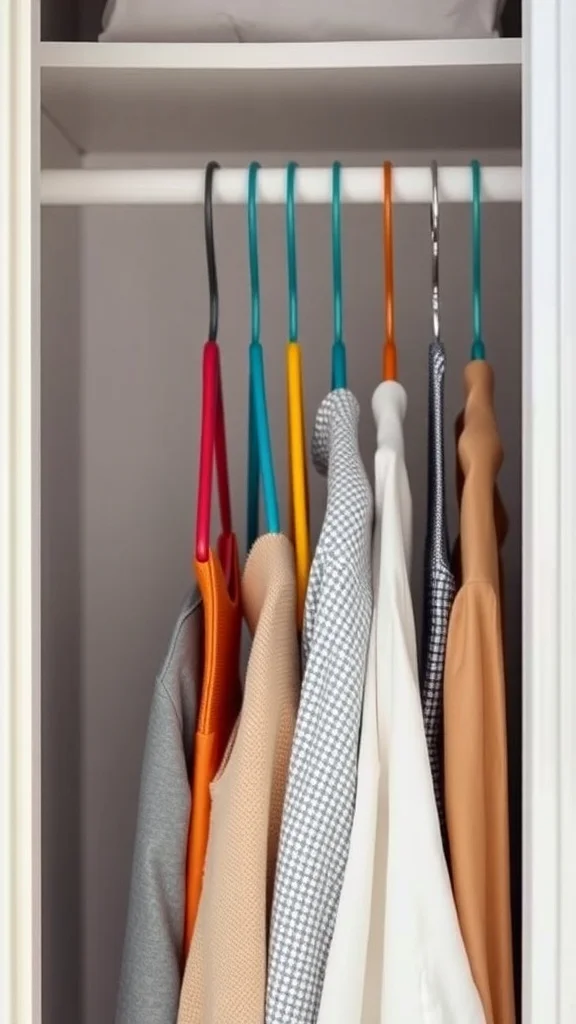
A row of slim velvet or plastic hangers holding shirts, jackets, and dresses in a tight neat row. So much more clothing fitting in the same space compared to bulky wooden hangers. Nothing slipping off. Everything hanging evenly.
Switching to slim hangers is the easiest closet upgrade you can make. You gain inches of extra hanging space overnight.
Replace all your mismatched bulky hangers with a uniform set of slim velvet or flocked hangers. The non-slip surface keeps clothes in place without clips. The thin profile creates more room between garments so you can fit significantly more in the same rod space. Use matching hangers throughout the closet for a clean cohesive look. Add hangers with clips for skirts and pants to keep them wrinkle-free. This one swap makes your closet feel instantly more spacious and organized.
Seasonal Storage Solutions
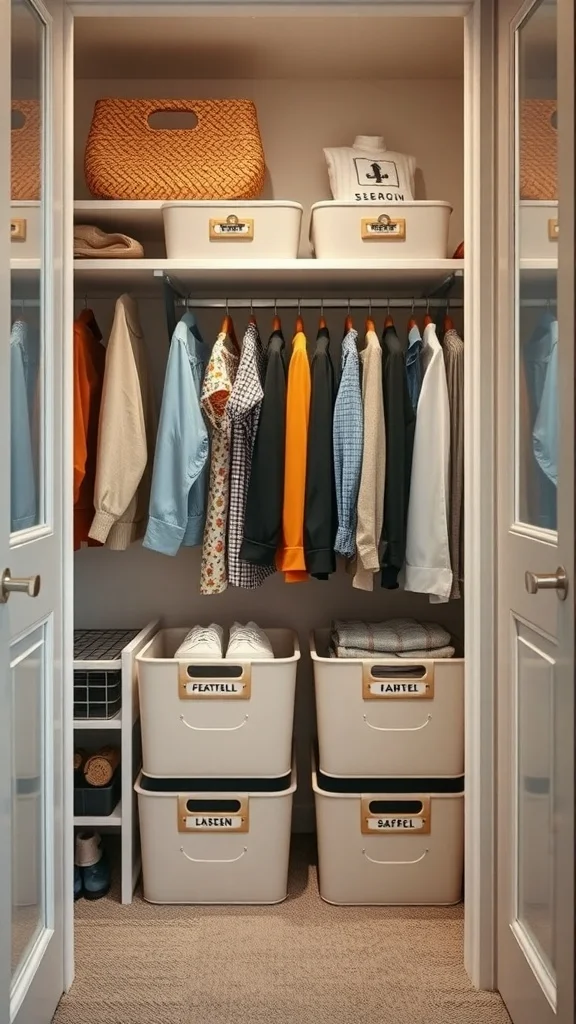
Labeled bins on the top shelf holding off-season clothing. Current-season pieces hanging neatly on the rod below. The closet only shows what you actually wear right now. Everything else is stored but easy to swap when the weather changes.
Rotating your wardrobe seasonally keeps a small closet from overflowing. You only see what is relevant and the rest waits its turn.
At the start of each season pack away clothes you will not wear for the next few months into labeled bins or vacuum-seal bags. Store them on the top shelf of your closet or under the bed. Keep only in-season items hanging and folded in the main closet space. Label each bin clearly with the season and contents so swapping is fast. This rotation keeps your closet feeling spacious and makes getting dressed easier because every item you see is something you can actually wear today.
Rotating Garment Rack
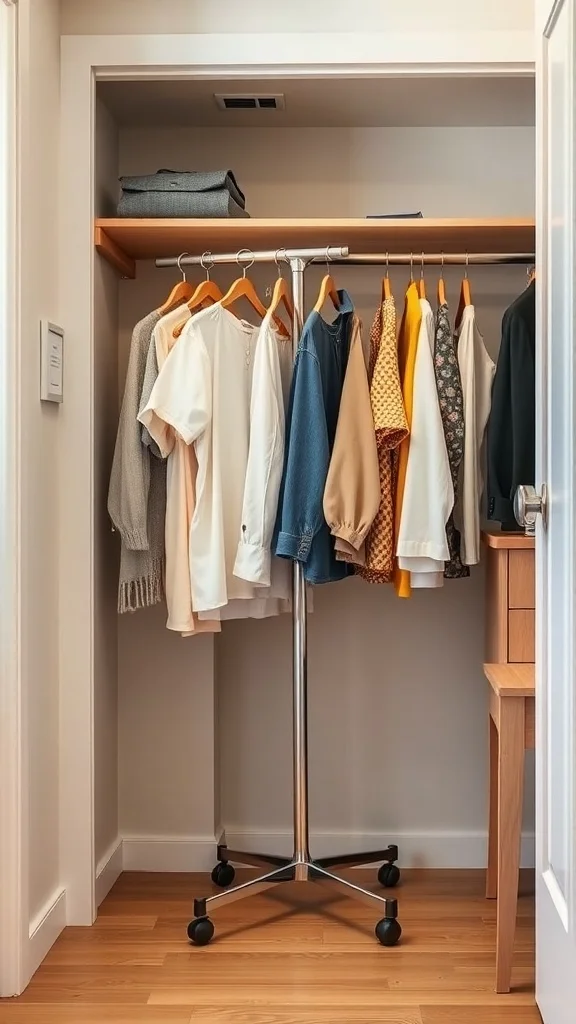
A spinning garment rack holding your most-worn pieces in a compact circle. You spin it and every item comes into view. No reaching to the back of the closet. No forgotten clothes hiding behind others.
A rotating rack brings every piece of clothing to you. It is like having a personal boutique inside your small closet.
Place a compact rotating rack inside your closet or in a corner of the bedroom if the closet is too small. Hang your most-worn items and current favorites on it for easy daily access. Keep the rack from being overcrowded so each piece is visible and wrinkle-free. Use it for the current week’s outfits and rotate fresh pieces in every Sunday. This spinning system makes getting dressed faster and ensures nothing in your wardrobe gets forgotten.
Space-Saving Shoe Racks
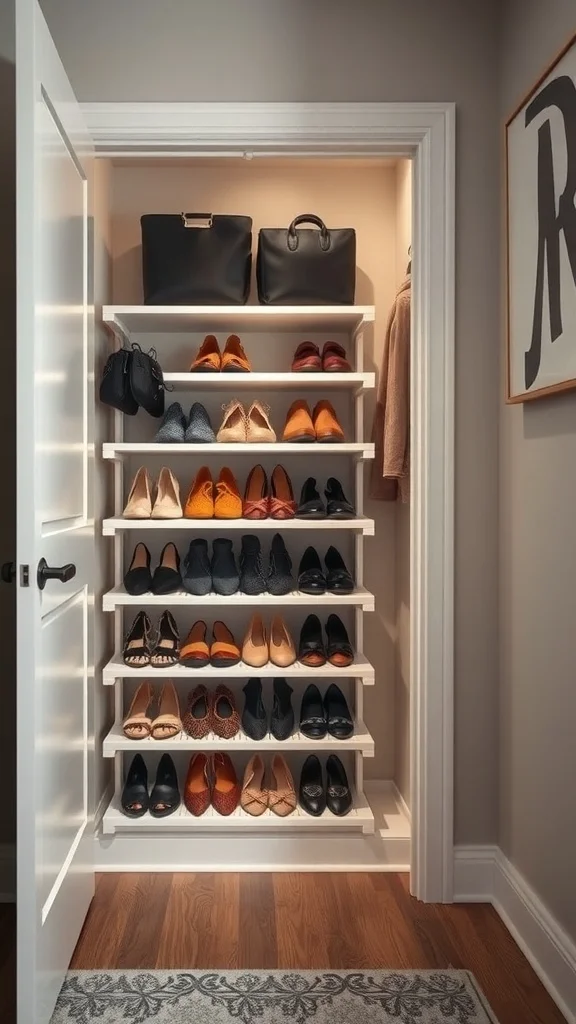
A slim multi-tier shoe rack on the closet floor holding pairs from heels to flats in neat rows. Every shoe visible and easy to grab. The floor stays organized instead of turning into a pile of mismatched pairs.
Shoes are usually the biggest source of closet chaos. A dedicated shoe rack solves that instantly and frees up floor space for everything else.
Choose a slim vertical shoe rack that fits the width of your closet floor. Stack your most-worn pairs at eye level and less-used ones at the top or bottom. Alternate the direction of each pair to fit more shoes per shelf. Keep the rack near the closet entrance for easy grab-and-go access. If floor space is tight use an over-the-door shoe organizer instead. A dedicated spot for every pair means no more digging through a pile to find the right shoes.
Under-Bed Storage Options
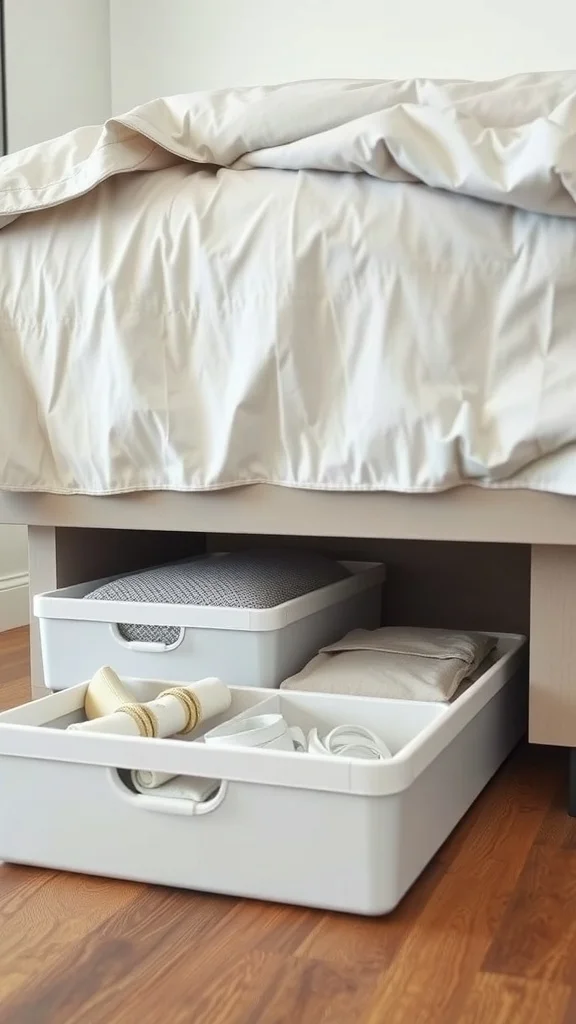
Slim storage bins tucked under the bed holding extra linens, accessories, and overflow from the closet. Out of sight but easy to slide out when you need something. The closet stays lean because the bed picks up the overflow.
Under-bed storage is like having an invisible extension of your closet. It handles the extras so the closet only holds what you use daily.
Measure the clearance under your bed and choose flat bins or rolling drawers that slide in and out easily. Use them for off-season clothes, extra bedding, or items that do not fit in the closet. Label each bin so you know what is inside without pulling it out. Choose bins with lids to keep dust away and wheels for easy access. Place the items you need least often furthest under the bed and the more frequently used ones at the front edge. This invisible storage system keeps your closet lean and your room clutter-free.
Multi-Functional Furniture
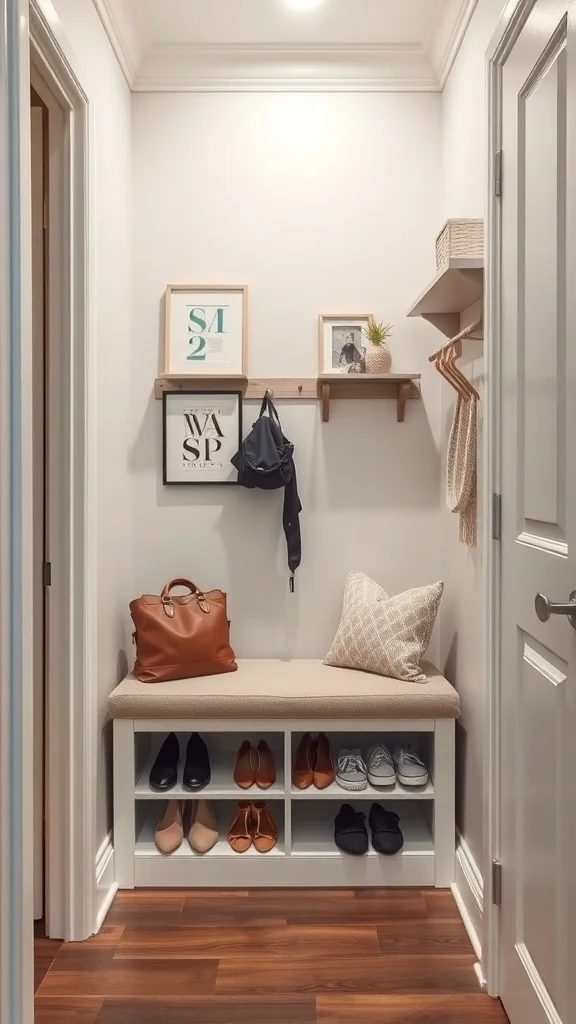
A bench at the base of the closet that serves as seating, shoe storage underneath, and a display surface on top. Hooks above it holding bags and jackets. A small shelf with framed art and a plant adding style. One piece of furniture doing three jobs at once.
Multi-functional furniture is the secret to making a small closet feel like it has everything without being crowded.
Place a slim bench or an ottoman with hidden storage inside the closet or just outside it. Use the top as a seat for getting dressed and the inside for storing shoes or accessories. Mount hooks on the wall above the bench for bags, hats, and scarves. Add a small shelf above the hooks for a framed print and a plant. This layered setup creates a mini dressing area that is functional, organized, and good-looking all at the same time.
Labeling for Easy Identification
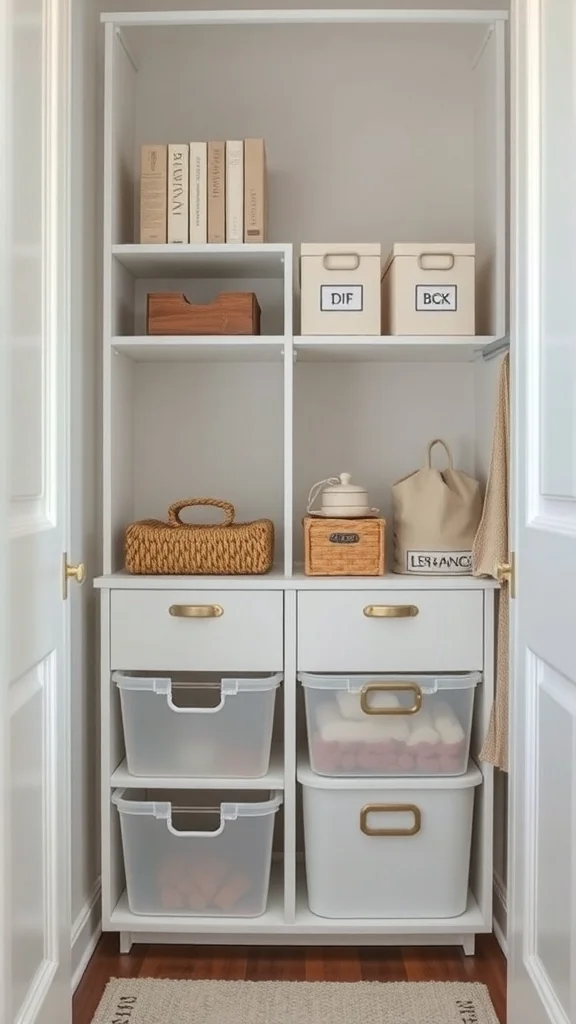
Boxes and bins on the shelves each with a clear label on the front. You glance at the label and grab exactly what you need. No opening, no guessing, no wasted time. The closet runs like a system.
Labels are the finishing touch that keeps an organized closet organized long-term. Without them everything slowly drifts back to chaos.
Label every bin, box, and basket in your closet with its contents. Use a label maker for a clean uniform look or handwrite tags for a more personal touch. Attach labels to the front of each container at a height you can read easily. Label shelves too if you share the closet so everyone knows where things go. Update labels whenever you change the contents. This simple habit takes minutes but keeps the closet system running smoothly for months without a major reorganization.
Hooks for Accessories
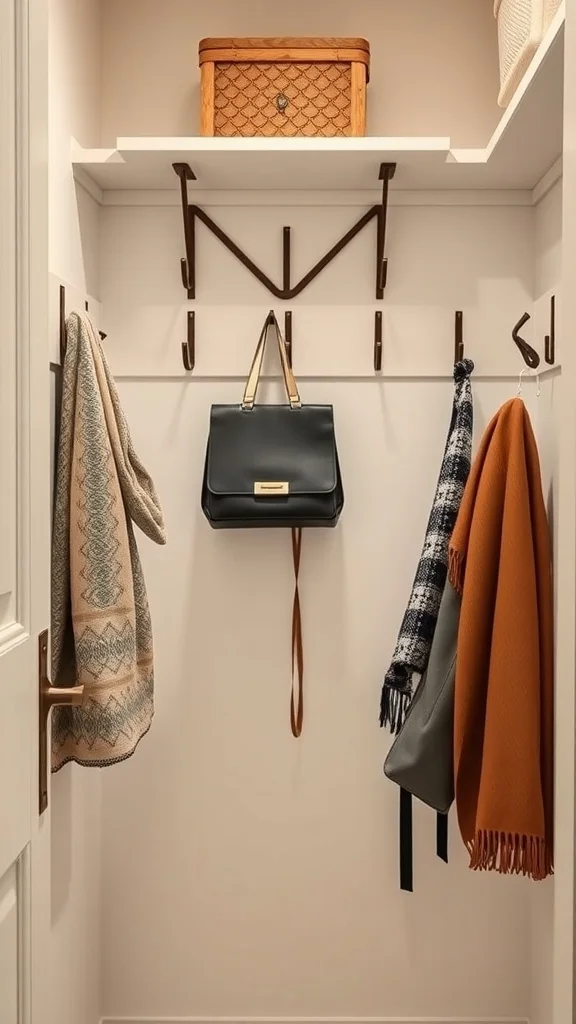
A row of hooks on the closet wall holding scarves, bags, belts, and hats. Everything hanging neatly and visible at a glance. No tangled necklaces or lost belts hiding in a drawer somewhere.
Hooks are the simplest addition to a closet and they solve the accessory problem instantly. Everything has a spot and everything is easy to grab.
Mount a row of hooks on the inside wall of your closet or on the back of the door. Assign each hook a specific type of accessory like one for bags, one for belts, one for scarves. Use smaller hooks or a jewelry organizer for necklaces and bracelets to prevent tangling. Space the hooks far enough apart so items hang freely without bunching. Choose hooks in a finish that complements your closet hardware. This wall-mounted system keeps accessories organized, visible, and wrinkle-free without using any shelf or drawer space.
Utilizing Corner Shelves
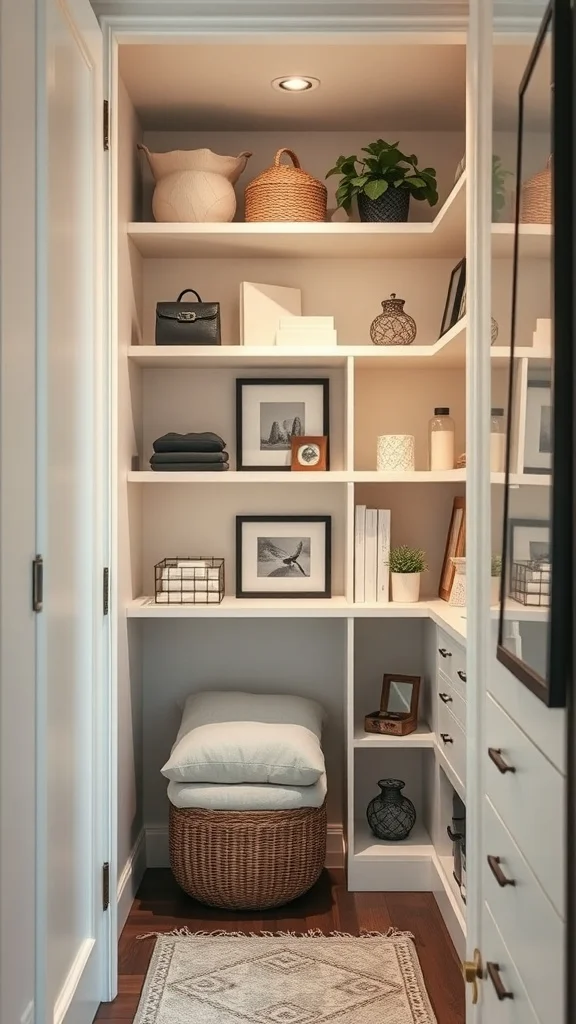
Corner shelves fitted into the angles of the closet where regular shelves do not reach. Baskets, folded items, and a plant sitting in spaces that would normally be wasted. The closet suddenly has storage in places you never thought to use.
Corners are the most overlooked part of any closet. Fitting shelves into those angles reclaims space that was just collecting dust.
Install small triangular or L-shaped shelves in the corners of your closet. Use them for folded items like sweaters or jeans, small baskets for accessories, or decorative pieces like a plant or a candle. Keep the corner items neatly stacked so they do not spill into the main shelving area. Match the shelf material to the rest of your closet for a seamless look. These corner additions give you extra storage without affecting the main hanging or shelving zones at all.
Foldable Storage Solutions
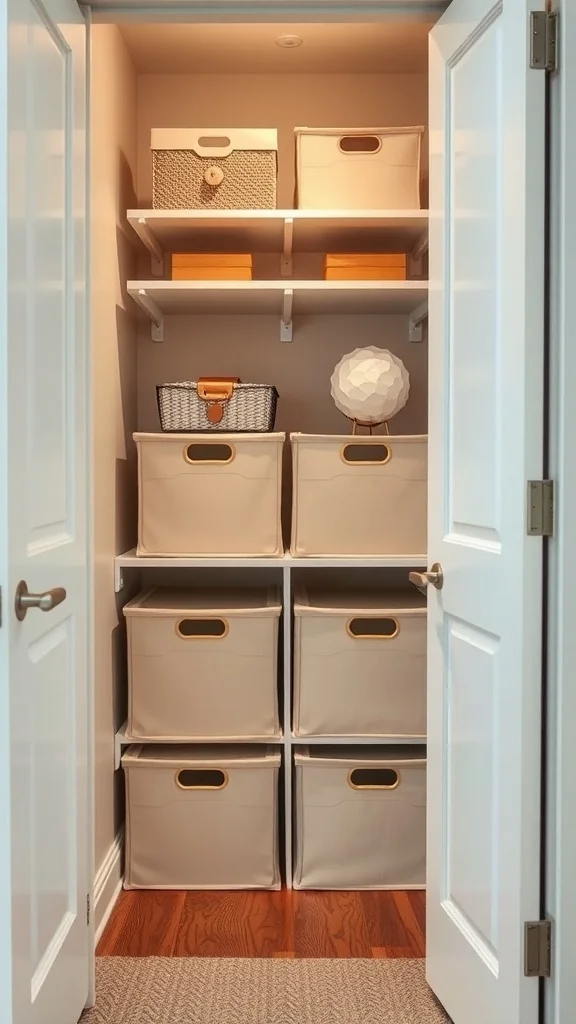
Fabric bins that collapse flat when empty and pop open when you need them. Stacked on shelves holding clothes, linens, and extras. Lightweight and easy to move. The closet stays flexible because the storage itself adapts.
Foldable bins give you storage when you need it and disappear when you do not. They are perfect for closets where the contents change with the seasons.
Choose collapsible fabric bins in a color or pattern that matches your closet aesthetic. Use them on shelves for categories like gym clothes, pajamas, and accessories. Fold them flat and store them when they are empty to free up shelf space. Label each bin so you can find contents quickly. Choose bins with reinforced sides so they hold their shape when loaded. This flexible storage system adapts to your changing needs and keeps the closet looking polished season after season.
Color-Coding Clothing
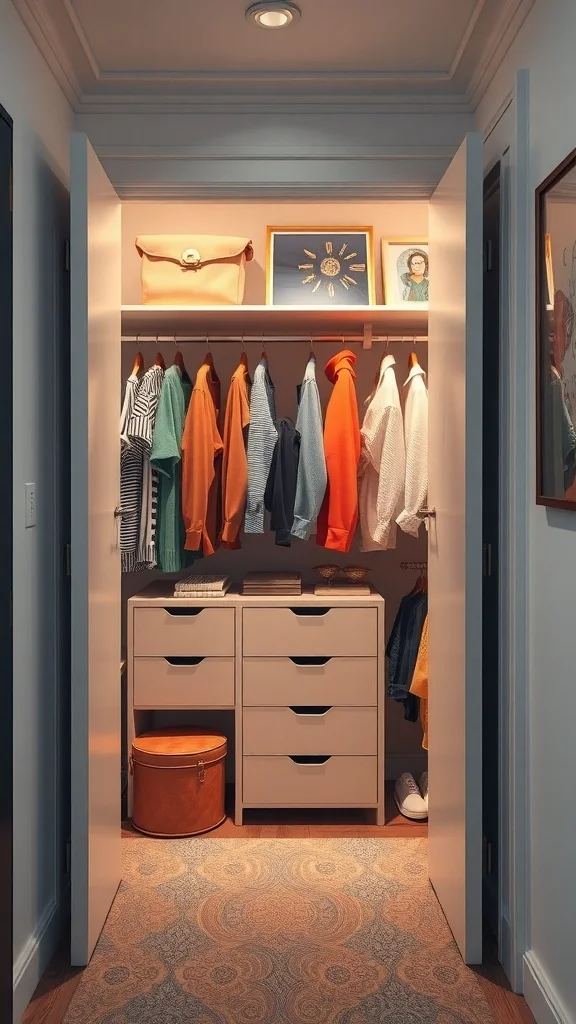
Clothes hanging on the rod arranged by color from light to dark. A rainbow flowing across the closet. Every item easy to find because you just look for the color you want. The closet looks like a boutique display.
Color-coding is as much about visual beauty as it is about function. It makes the closet a pleasure to open every morning.
Arrange all hanging clothes by color starting with whites and moving through pastels, brights, and darks. Within each color group organize by garment type if you want an extra layer of order. Step back and adjust until the flow looks smooth and balanced. Use matching slim hangers for a clean uniform look that highlights the color arrangement. Keep storage bins and drawers below organized by category to complement the color system above. This visual approach makes outfit selection faster and turns your small closet into something genuinely beautiful to look at.
DIY Closet Organization Hacks
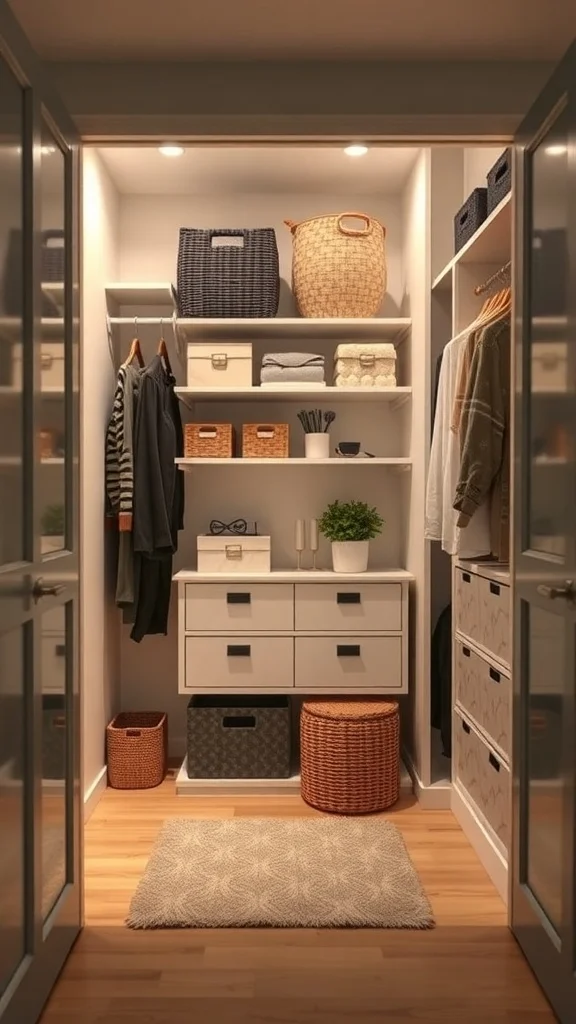
Shelves, baskets, and drawer units assembled with simple materials creating a custom closet system on a budget. Everything labeled and arranged. A small rug on the closet floor adding comfort and style. It looks custom but it was all done at home.
You do not need an expensive closet system to get organized. A few smart DIY hacks give you the same result for a fraction of the cost.
Start with adjustable shelving brackets from a hardware store and cut shelves to fit your closet width. Add inexpensive fabric bins on the shelves for categorized storage. Use tension rods to create extra hanging space for scarves or tank tops. Repurpose small boxes or containers with labels for drawer organization. Add a small rug at the base of the closet for comfort. Mount hooks on any available wall space for bags and accessories. These affordable DIY solutions give you a fully customized closet without hiring a professional or spending a fortune.
Using Wall Space Effectively
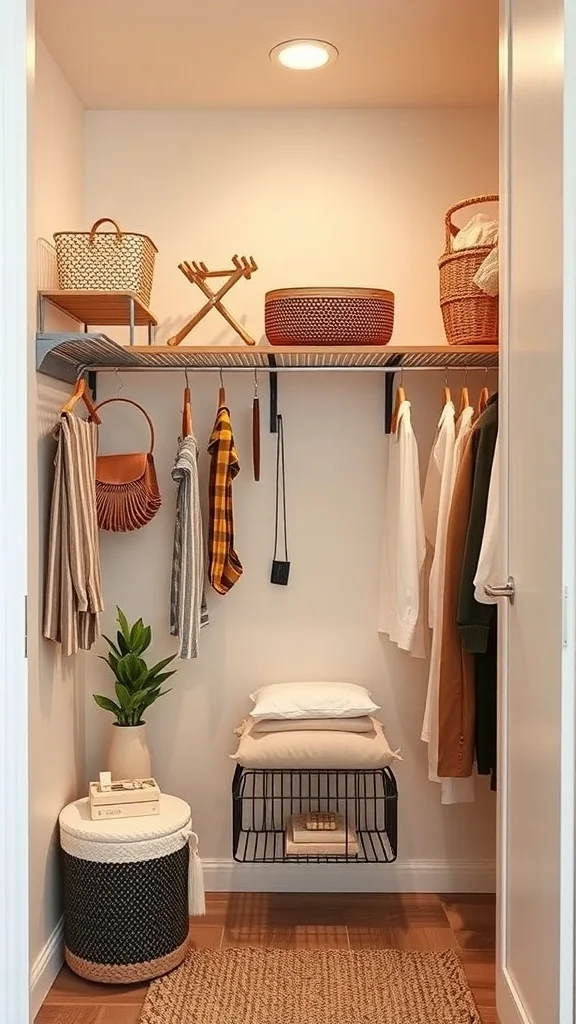
Hooks holding bags on one wall. Shelves with baskets on another. Hangers on the rod using the center. A plant adding life. Every wall surface inside the closet working as hard as the shelves and the rod.
The walls inside your closet are free storage that most people ignore. Using them properly multiplies your available space.
Mount hooks on any open wall space for bags, belts, and robes. Install a slim shelf on a wall that does not have the main rod for extra folded storage. Use adhesive hooks on the inside of the closet door for lightweight items like jewelry or ties. Place a small plant on a shelf to keep the space feeling fresh. Keep the walls organized with consistent hardware finishes so everything looks intentional. This wall-focused approach adds significant storage capacity without changing the closet’s footprint.
Incorporating Mirrors for Illusion
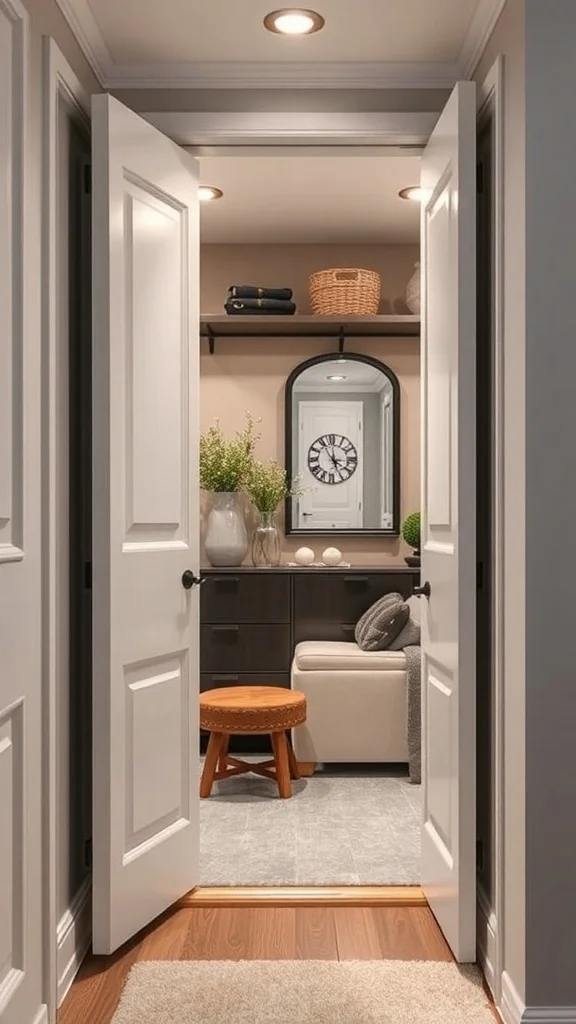
A mirror mounted on the inside of the closet door or on the back wall reflecting light and making the closet feel twice as large. The reflection lets you see outfits from head to toe without leaving the room. The closet feels brighter and more open.
A mirror inside the closet is functional and transformative. It opens up a tight space and makes getting dressed easier at the same time.
Mount a full-length mirror on the inside of the closet door or on the back wall if space allows. Choose a frameless or slim-framed design to keep the look clean. Position it where it catches the most light from the room or the closet’s overhead fixture. If a full-length mirror does not fit try a round or half-length one at eye level. The reflection adds depth and brightness to even the smallest closet and gives you a practical spot to check your outfit before heading out.
Rotating Accessory Trays
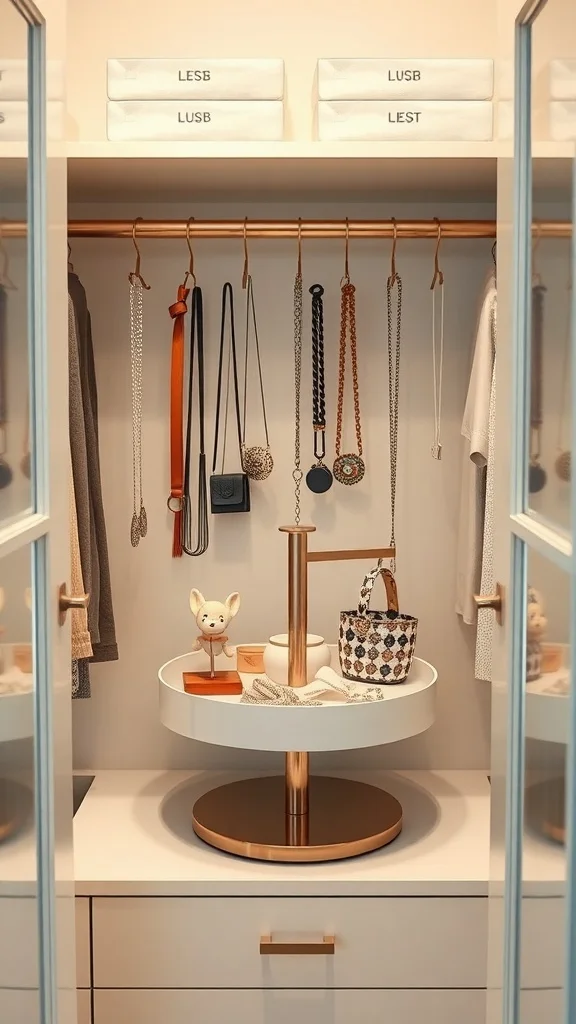
A spinning tray on the dresser or shelf holding necklaces, bracelets, rings, and earrings in organized compartments. One spin and everything is visible. No more tangled chains or missing earrings buried in a drawer.
A rotating tray is the jewelry box upgrade your closet needs. It keeps everything untangled, visible, and easy to grab in seconds.
Place a rotating accessory tray on a shelf, dresser, or inside the closet on a flat surface. Arrange jewelry by type with necklaces on one section, bracelets on another, and earrings in a compartment with dividers. Spin the tray each morning to find what matches your outfit. Choose a tray in a material that complements your closet like clear acrylic for a modern look or wood for warmth. Keep the tray from being overcrowded so each piece has breathing room. This spinning organizer turns your accessories into a display that is both practical and beautiful.